
UK Road Signs Quiz: Free Visual Practice
Take this UK road signs quiz to practise recognising common British traffic signs. Answer ten original, illustrated questions, check each explanation and learn the difference between signs that give orders, warn of danger or provide information. Use the current Highway Code to confirm any rule before driving.
Independent DiuMitra revision for England, Scotland and Wales. Not an official DVSA examination or substitute for the current Highway Code.
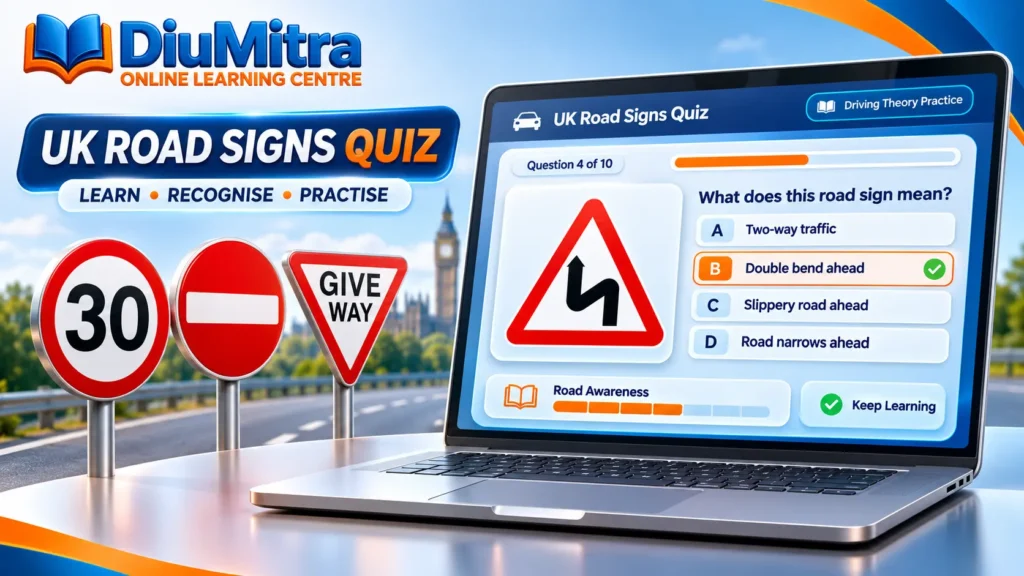
Start the Free UK Road Signs Quiz
Begin with ten illustrated road-sign questions. Select the meaning you think is correct, read the explanation, then move to the next sign. Your answers stay in this browser session; the short practice does not ask for an account.
What does this sign mean?
If the quiz does not load, please use the official Highway Code traffic signs guide or explore the DiuMitra visual sign library below.
How to Read UK Road Signs
The UK signing system groups signs by the job they do: giving orders, warning of hazards or supplying information. Understanding the basic shapes makes it easier to interpret unfamiliar signs.
Circles give orders
Red rings usually indicate a restriction or prohibition. Blue circles generally give a positive instruction, such as going ahead only or using a specified route.
Triangles warn
Red-bordered triangular signs generally alert you to hazards such as traffic signals, bends or junctions. Look at the symbol and respond to conditions safely.
Rectangles inform
Rectangular signs commonly give information or directions. Colours can also matter: motorway directions use blue signs, and primary routes use green.
More Road Signs, Signals and Markings
After the ten-question starter, explore the DiuMitra visual sign library and any available topic assessment. The independent starter above remains usable even when the extended reference collection is unavailable.
Road Signs, Signals & Markings
Learn from governed Highway Code visual assets, then use visual self-check and the full topic assessment.
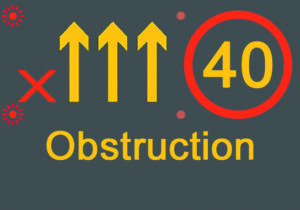
Leave motorway at next exit
Governed local copy
Open related Highway Code reference
Signals to other road users
Governed local copy
Open related Highway Code reference


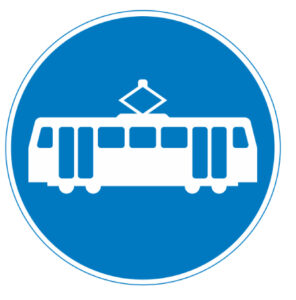


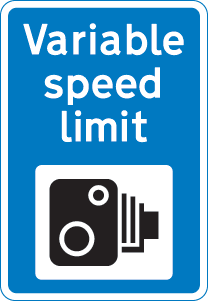

Complete official reference
The Highway Code
England, Scotland and Wales · governed DiuMitra reference copy
Rule 89
Vehicle condition. You MUST ensure your vehicle and trailer comply with the full requirements of the Road Vehicles (Construction and Use) Regulations and Road Vehicles Lighting Regulations (see âThe road user and the lawâ).
Fitness to drive (rules 90 to 94)
Rule 90
Make sure that you are fit to drive. You MUST report to the Driver and Vehicle Licensing Agency (DVLA) any health condition likely to affect your driving.
Law RTA 1988 sect 94
Rule 91
Driving when you are tired greatly increases your risk of collision. To minimise this risk
- make sure you are fit to drive. Do not begin a journey if you are tired. Get sufficient sleep before embarking on a long journey
- avoid undertaking long journeys between midnight and 6 am, when natural alertness is at a minimum
- plan your journey to take sufficient breaks. A minimum break of at least 15 minutes after every two hours of driving is recommended
- if you feel sleepy, stop in a safe place. Do not stop in an emergency area or on a hard shoulder of a motorway (see Rule 262 for guidance on places to take a break when travelling on motorways).
Rule 92
Vision. You MUST be able to read a vehicle number plate, in good daylight, from a distance of 20 metres (or 20.5 metres where the old style number plate is used). If you need to wear glasses (or contact lenses) to do this, you MUST wear them at all times while driving. The police have the power to require a driver to undertake an eyesight test.
Laws RTA 1988 sect 96, & MV(DL)R reg 40 & sched 8
Rule 93
Slow down, and if necessary stop, if you are dazzled by bright sunlight.
Rule 94
At night or in poor visibility, do not use tinted glasses, lenses or visors if they restrict your vision.
Alcohol and drugs (rules 95 to 96)
Rule 95
Do not drink and drive as it will seriously affect your judgement and abilities.
In England and Wales you MUST NOT drive with a breath alcohol level higher than 35 microgrammes/100 millilitres of breath or a blood alcohol level of more than 80 milligrammes/100 millilitres of blood.
In Scotland the legal limits are lower. You MUST NOT drive with a breath alcohol level higher than 22 microgrammes/100 millilitres of breath or a blood alcohol level of more than 50 milligrammes/100 millilitres of blood.
Alcohol will
- give a false sense of confidence
- reduce co-ordination and slow down reactions
- affect judgement of speed, distance and risk
- reduce your driving ability, even if youâre below the legal limit
- take time to leave your body; you may be unfit to drive in the evening after drinking at lunchtime, or in the morning after drinking the previous evening.
The best solution is not to drink at all when planning to drive because any amount of alcohol affects your ability to drive safely. If you are going to drink, arrange another means of transport.
Laws RTA 1988 sects 4, 5 & 11(2), & PLSR
Rule 96
You MUST NOT drive under the influence of drugs or medicine. For medicines, check with your doctor or pharmacist and do not drive if you are advised that you may be impaired.
You MUST NOT drive if you have illegal drugs or certain medicines in your blood above specified limits. It is highly dangerous so never take illegal drugs if you intend to drive; the effects are unpredictable, but can be even more severe than alcohol and result in fatal or serious road crashes. Illegal drugs have been specified at very low levels so even small amounts of use could be above the specified limits. The limits for certain medicines have been specified at higher levels, above the levels generally found in the blood of patients who have taken normal therapeutic doses. If you are found to have a concentration of a drug above its specified limit in your blood because you have been prescribed or legitimately supplied a particularly high dose of medicine, then you can raise a statutory medical defence, provided your driving was not impaired by the medicine you are taking.
Law RTA 1988 sects 4 & 5
Before setting off (rule 97)
Rule 97
Before setting off. You MUST ensure that
- you have a valid licence and insurance to drive the vehicle you intend to use (see Motor vehicle documentation and learner driver requirements)
- your vehicle is legal and roadworthy (see Motor vehicle documentation and learner driver requirements and Vehicle maintenance, safety and security for important vehicle maintenance and safety checks).
You SHOULD ensure that
- you have planned your route and allowed sufficient time for breaks and possible delays
- you have sufficient fuel or charge for your journey, especially if it includes motorway driving
- you know where all the controls are and how to use them
- clothing and footwear do not prevent you using the controls in the correct manner
- your mirrors and seat are adjusted correctly to ensure comfort, full control and maximum vision
- head restraints are properly adjusted to reduce the risk of neck and spine injuries in the event of a collision.
It is recommended for emergency use that
- you have a mobile telephone containing emergency contacts (e.g. breakdown assistance)
- you have high-visibility clothing.
Laws RTA 1988 sects 42, 45, 47, 49, 53, 87, 99(4) & 143, MV(DL)R reg 16, 40 & sched 4, VERA sect 29, RVLR 1989 regs 23 & 27, & CUR regs 27, 30, 32 & 61

Rule 98
Before towing. As a driver
- you MUST NOT tow more than your licence permits. If you passed your car driving test on or after 1 January 1997, you are restricted on the weight of trailer you can tow
- you MUST ensure that both your vehicle and your trailer are in a roadworthy condition. This includes checking that all tyres are legal, the trailer braking system is in full working order and all trailer lights are working correctly
- you MUST NOT overload your vehicle or trailer. You should not tow a weight greater than that recommended by the manufacturer of your vehicle
- you should distribute the weight in your caravan or trailer evenly with heavy items over the axle(s) and ensure a downward load on the tow ball. The manufacturerâs recommended weight and tow ball load should not be exceeded. This should minimise the possibility of swerving or snaking and loss of control
- you MUST secure your load and it MUST NOT stick out dangerously. Make sure any heavy or sharp objects and any animals are secured safely. If there is a collision, they might hit someone inside the vehicle and cause serious injury
- if your vehicle is narrower than your trailer or load, or your trailer or load obstructs your rearward view, then towing mirrors MUST be used
- your trailer MUST be fitted with a secondary coupling device, such as a safety chain
- carrying a load or pulling a trailer may require you to adjust your headlights.
During towing. As a driver
- you should be aware that reduced speed limits apply (see Rule 124)
- you should be aware that your stopping distance may increase significantly when towing (see Rule 126)
- you MUST NOT drive in the right-hand lane on motorways with three or more lanes (see Rule 265)
- if the trailer starts to swerve or snake, or you lose control, ease off the accelerator and reduce speed gently to regain control. Do not brake harshly.
Breakdowns. In the event of a breakdown, be aware
- that towing a vehicle on a tow rope is potentially dangerous. You should consider using a solid tow bar or professional recovery
- it may take longer to build up speed when rejoining a carriageway (see also Rule 278).
For additional advice about towing safely, see Further reading.
Laws CUR regs 27, 33, 86a & 100, RVLR reg 18, MT(E&W)R reg 12 & MV(DL)R reg 6, 7, 76 & sched 2
Seat belts and child restraints (rules 99 to 102)
Rule 99
You MUST wear a seat belt in cars, vans and other goods vehicles if one is fitted (see table below). Adults, and children aged 14 years and over, MUST use a seat belt or child restraint, where fitted, when seated in minibuses, buses and coaches. Exemptions are allowed for the holders of medical exemption certificates and those making deliveries or collections in goods vehicles when travelling less than 50 metres (approx 162 feet).
Laws RTA 1988 sects 14 & 15, MV(WSB)R, MV(WSBCFS)R & MV(WSB)(A)R 2005 & 2006
Seat belt requirements. This table summarises the main legal requirements for wearing seat belts in cars, vans and other goods vehicles.
| Front seat | Rear seat | Who is responsible? | |
|---|---|---|---|
| Driver | Seat belt MUST be worn if fitted | - | Driver |
| Child under 3 years of age | Correct child restraint MUST be used | Correct child restraint MUST be used. If one is not available in a taxi, may travel unrestrained. | Driver |
| Child from 3rd birthday up to 1.35 metres in height (or 12th birthday, whichever they reach first) | Correct child restraint MUST be used | Correct child restraint MUST be used where seat belts fitted. MUST use adult belt if correct child restraint is not available in a licensed taxi or private hire vehicle, or for reasons of unexpected necessity over a short distance, or if two occupied restraints prevent fitment of a third. | Driver |
| Child over 1.35 metres (approx 4ft 5ins) in height or 12 or 13 years | Seat belt MUST be worn if available | Seat belt MUST be worn if available | Driver |
| Adult passengers aged 14 and over | Seat belt MUST be worn if available | Seat belt MUST be worn if available | Passenger |
Rule 100
The driver MUST ensure that all children under 14 years of age in cars, vans and other goods vehicles wear seat belts or sit in an approved child restraint where required (see table above). If a child is under 1.35 metres (approx 4 feet 5 inches) tall, a baby seat, child seat, booster seat or booster cushion MUST be used suitable for the childâs weight and fitted to the manufacturerâs instructions.
Laws RTA 1988 sects 14 & 15, MV(WSB)R, MV(WSBCFS)R & MV(WSB)(A)R 2006

Rule 101
A rear-facing baby seat MUST NOT be fitted into a seat protected by an active frontal airbag, as in a crash it can cause serious injury or death to the child.
Laws RTA 1988 sects 14 & 15, MV(WSB)R, MV(WSBCFS)R & MV(WSB)(A)R 2006
Rule 102
Children in cars, vans and other goods vehicles. Drivers who are carrying children in cars, vans and other goods vehicles should also ensure that
- children should get into the vehicle through the door nearest the kerb
- child restraints are properly fitted to manufacturerâs instructions
- children do not sit behind the rear seats in an estate car or hatchback, unless a special child seat has been fitted
- the child safety door locks, where fitted, are used when children are in the vehicle
- children are kept under control.
Road signs topic test
Road and traffic signs — Topic Practice
If the extended sign collection is unavailable, continue with the official Highway Code traffic signs reference while the learning catalogue is updated.
Road Signs People Commonly Confuse
Several signs can appear similar at first glance. In the quiz, read the shape, colour, symbol and any words or plates rather than guessing from one feature.
No waiting vs no stopping
The red diagonal line through a blue circle means no waiting; a red X means no stopping. Check nearby plates and road markings for the full restriction.
Ahead only vs one way
A white upward arrow inside a blue circle gives an ahead-only instruction. The arrow inside a blue rectangle indicates one-way traffic.
No entry vs give way
No Entry restricts vehicular entry. Give Way means approaching traffic on the major road has priority; you may need to stop before proceeding.
How to Practise Road Signs Effectively
Try a short focused session, understand mistakes immediately and return to official sources. DiuMitra’s starter activity does not grade your readiness for the real driving theory test.
Look at the whole sign
Notice whether the sign is circular, triangular or rectangular. Check the symbol, numbers and any additional text beneath it.
Choose the best meaning
Select one answer without looking it up first. The activity shows an explanation and identifies the correct answer after you choose.
Review and repeat
Use the Highway Code when uncertain, especially for restrictions and exceptions. Repeat the quiz to check whether the explanations make sense.
UK Road Sign Categories at a Glance
Signs work together with road markings, signals and supplementary plates. This overview helps you decide which official section to study next.
| Type of sign | What it generally tells you | Typical examples |
|---|---|---|
| Regulatory / order signs | What you must do, or what you must not do | STOP, Give Way, No Entry, maximum speed, Ahead Only |
| Warning signs | Hazards or road conditions to anticipate | Traffic signals ahead, bends, junctions |
| Direction and information signs | Routes, destinations, road layout or facilities | One-way traffic, direction boards, motorway information |
| Supplementary plates | Extra details that qualify a main sign | Times, distances, vehicle restrictions |
| Road markings and signals | Additional instructions or information on the road | Stop lines, lane arrows, traffic lights |
Official UK Road Signs and Revision Resources
This quiz uses original schematic sign drawings and independently written explanations based on published traffic-sign guidance. Signs, restrictions and test arrangements can change, so the official guidance remains the source for current requirements.
For learner drivers
Build visual recognition alongside the wider road rules, observations and safe decision-making needed for the GB car theory test. Traffic signs are one topic within the overall assessment.
Continue with Driving Theory Practice Tests and Driving Theory Study Course lessons.
For road users refreshing their knowledge
Use the quiz to recognise sign meanings, then check official explanations. Never assume an image alone gives every detail of a road restriction; signs may be paired with plates, road markings or location-specific arrangements.
Northern Ireland has its own official arrangements and some differences. Follow the relevant local authority guidance.
UK Road Signs Quiz FAQs
Clear answers about signs, free practice, official study material and how DiuMitra’s activities differ from a real driving theory examination.
Recognise the Sign. Understand the Rule.
Start the free visual road signs quiz, check unfamiliar signs against official guidance and continue with Driving Theory Practice Tests when you are ready. Consistent revision matters more than memorising one set of answers.
DiuMitra provides independent learning resources only. This quiz is not an official DVSA examination, and it does not guarantee a theory test pass.