
UK Road Signs Quiz: Free Visual Practice
Take this UK road signs quiz to practise recognising common British traffic signs. Answer ten original, illustrated questions, check each explanation and learn the difference between signs that give orders, warn of danger or provide information. Use the current Highway Code to confirm any rule before driving.
Independent DiuMitra revision for England, Scotland and Wales. Not an official DVSA examination or substitute for the current Highway Code.
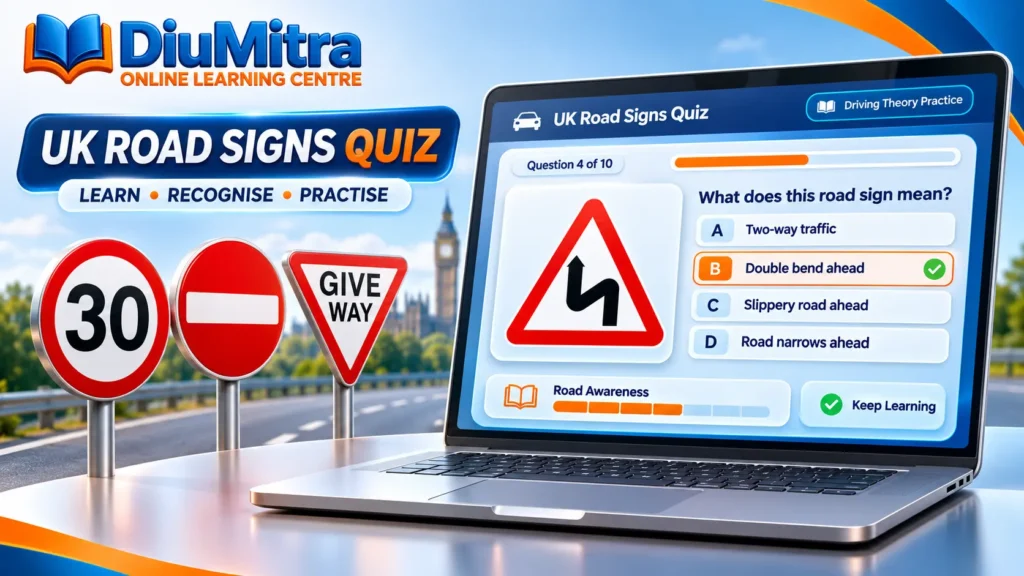
Start the Free UK Road Signs Quiz
Begin with ten illustrated road-sign questions. Select the meaning you think is correct, read the explanation, then move to the next sign. Your answers stay in this browser session; the short practice does not ask for an account.
What does this sign mean?
If the quiz does not load, please use the official Highway Code traffic signs guide or explore the DiuMitra visual sign library below.
How to Read UK Road Signs
The UK signing system groups signs by the job they do: giving orders, warning of hazards or supplying information. Understanding the basic shapes makes it easier to interpret unfamiliar signs.
Circles give orders
Red rings usually indicate a restriction or prohibition. Blue circles generally give a positive instruction, such as going ahead only or using a specified route.
Triangles warn
Red-bordered triangular signs generally alert you to hazards such as traffic signals, bends or junctions. Look at the symbol and respond to conditions safely.
Rectangles inform
Rectangular signs commonly give information or directions. Colours can also matter: motorway directions use blue signs, and primary routes use green.
More Road Signs, Signals and Markings
After the ten-question starter, explore the DiuMitra visual sign library and any available topic assessment. The independent starter above remains usable even when the extended reference collection is unavailable.
Road Signs, Signals & Markings
Learn from governed Highway Code visual assets, then use visual self-check and the full topic assessment.
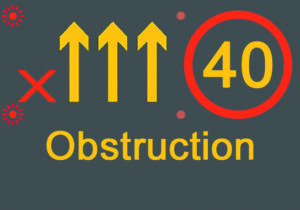
Leave motorway at next exit
Governed local copy
Open related Highway Code reference
Signals to other road users
Governed local copy
Open related Highway Code reference


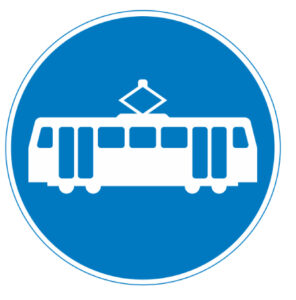


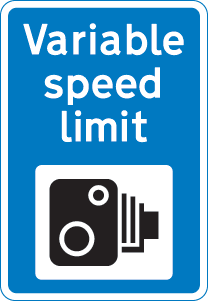

Complete official reference
The Highway Code
England, Scotland and Wales · governed DiuMitra reference copy
Annex 6. Vehicle maintenance, safety and security
Vehicle maintenance
Take special care that lights, brakes, steering, exhaust system, seat belts, demisters, wipers, washers and any audible warning systems are all working. Also
- lights, indicators, reflectors, and number plates MUST be kept clean and clear
- windscreens and windows MUST be kept clean and free from obstructions to vision
- lights MUST be properly adjusted to prevent dazzling other road users.
- Extra attention needs to be paid to this if the vehicle is heavily loaded
- exhaust emissions MUST NOT exceed prescribed levels
- ensure your seat, seat belt, head restraint and mirrors are adjusted correctly before you drive
- ensure that items of luggage are securely stowed.
Laws RVLR 1989 regs 23 & 27, & CUR regs 30 & 61
Warning displays. Make sure that you understand the meaning of all warning displays on the vehicle instrument panel. Do not ignore warning signs, they could indicate a dangerous fault developing.
- When you turn the ignition key, warning lights will be illuminated but will go out when the engine starts (except the handbrake warning light). If they do not, or if they come on while you are driving, stop and investigate the problem, as you could have a serious fault.
- If the charge warning light comes on while you are driving, it may mean that the battery isn’t charging. This should also be checked as soon as possible to avoid loss of power to lights and other electrical systems.
Window tints. You MUST NOT use a vehicle with excessively dark tinting applied to the windscreen, or to the glass in any front window to either side of the driver. Window tinting applied during manufacture complies with the Visual Light Transmittance (VLT) standards. There are no VLT limits for rear windscreens or rear passenger windows.
Laws RTA 1988 sect 42 & CUR reg 32
Tyres. Tyres MUST be correctly inflated to the vehicle manufacturer’s specification for the load being carried. Always refer to the vehicle’s handbook or data. Tyres should also be free from certain cuts and other defects.
Cars, light vans and light trailers MUST have a tread depth of at least 1.6 mm across the central three-quarters of the breadth of the tread and around the entire circumference.
Motorcycles, large vehicles and passenger-carrying vehicles MUST have a tread depth of at least 1 mm across three-quarters of the breadth of the tread and in a continuous band around the entire circumference.
Mopeds should have visible tread.
Be aware that some vehicle defects can attract penalty points.
Tyre age. Tyres over 10 years old MUST NOT be used on the front axles of:
- goods vehicles with a maximum gross weight of more than 3.5 tonnes
- passenger vehicles with more than 8 passenger seats
Additionally, they MUST NOT be used on the rear axles of passenger vehicles with 9 to 16 passenger seats, unless equipped with twin wheels.
To prove the age of a tyre, it is further required that the date of tyre manufacture marking MUST always be legible.
Vehicles currently excluded from tyre roadworthiness regulations and vehicles of historical interest which are not used for commercial purpose are exempt from these requirements.
Law CUR reg 27
If a tyre bursts while you are driving, try to keep control of your vehicle. Grip the steering wheel firmly and allow the vehicle to roll to a stop at the side of the road.
If you have a flat tyre, stop as soon as it is safe to do so. Only change the tyre if you can do so without putting yourself or others at risk - otherwise call a breakdown service.
Tyre pressures. Check weekly. Do this before your journey, when tyres are cold. Warm or hot tyres may give a misleading reading.
Your brakes and steering will be adversely affected by under-inflated or over-inflated tyres. Excessive or uneven tyre wear may be caused by faults in the braking or suspension systems, or wheels which are out of alignment. Have these faults corrected as soon as possible.
Fluid levels. Check the fluid levels in your vehicle at least weekly. Low brake fluid may result in brake failure and a crash. Make sure you recognise the low fluid warning lights if your vehicle has them fitted.
Before winter. Ensure that the battery is well maintained and that there are appropriate anti-freeze agents in your radiator and windscreen bottle.
Other problems. If your vehicle
- pulls to one side when braking, it is most likely to be a brake fault or incorrectly inflated tyres. Consult a garage or mechanic immediately
- continues to bounce after pushing down on the front or rear, its shock absorbers are worn. Worn shock absorbers can seriously affect the operation of a vehicle and should be replaced
- smells of anything unusual such as burning rubber, petrol or an electrical fault; investigate immediately. Do not risk a fire.
Overheated engines or fire. Most engines are water-cooled. If your engine overheats, you should wait until it has cooled naturally. Only then remove the coolant filler cap and add water or other coolant.
If your vehicle catches fire, get the occupants out of the vehicle quickly and to a safe place. Do not attempt to extinguish a fire in the engine compartment, as opening the bonnet will make the fire flare. Call the fire brigade.
Petrol stations/fuel tank/fuel leaks. Ensure that, when filling up your vehicle’s tank or any fuel cans you are carrying, you do not spill fuel on the forecourt. Any spilled fuel should be immediately reported to the petrol station attendant. Diesel spillage is dangerous to other road users, particularly motorcyclists, as it will significantly reduce the level of grip between the tyres and road surface. Double-check for fuel leaks and make sure that
- you do not overfill your fuel tank
- the fuel cap is fastened securely
- the seal in the cap is not torn, perished or missing
- there is no visual damage to the cap or the fuel tank.
Emergency fuel caps, if fitted, should form a good seal.
Never smoke, or use a mobile phone, on the forecourt of petrol stations as these are major fire risks and could cause an explosion.
Undertake all aspects of the daily walkaround checks for commercial vehicles, as recommended by DVSA (www.gov.uk/dvsa/commercial-vehicle-safety) and the Fleet Operator Recognition Scheme (www.fors-online.org.uk).
Vehicle security
When you leave your vehicle you should
- remove the ignition key and engage the steering lock
- lock the car, even if you only leave it for a few minutes
- close the windows completely
- never leave children or pets in an unventilated car
- take all contents with you, or lock them in the boot. Remember, for all a thief knows a carrier bag may contain valuables
- never leave vehicle documents in the car.
For extra security fit an anti-theft device such as an alarm or immobiliser. If you are buying a new car it is a good idea to check the level of built-in security features. Consider having your registration number etched on all your car windows. This is a cheap and effective deterrent to professional thieves.
Road signs topic test
Road and traffic signs — Topic Practice
If the extended sign collection is unavailable, continue with the official Highway Code traffic signs reference while the learning catalogue is updated.
Road Signs People Commonly Confuse
Several signs can appear similar at first glance. In the quiz, read the shape, colour, symbol and any words or plates rather than guessing from one feature.
No waiting vs no stopping
The red diagonal line through a blue circle means no waiting; a red X means no stopping. Check nearby plates and road markings for the full restriction.
Ahead only vs one way
A white upward arrow inside a blue circle gives an ahead-only instruction. The arrow inside a blue rectangle indicates one-way traffic.
No entry vs give way
No Entry restricts vehicular entry. Give Way means approaching traffic on the major road has priority; you may need to stop before proceeding.
How to Practise Road Signs Effectively
Try a short focused session, understand mistakes immediately and return to official sources. DiuMitra’s starter activity does not grade your readiness for the real driving theory test.
Look at the whole sign
Notice whether the sign is circular, triangular or rectangular. Check the symbol, numbers and any additional text beneath it.
Choose the best meaning
Select one answer without looking it up first. The activity shows an explanation and identifies the correct answer after you choose.
Review and repeat
Use the Highway Code when uncertain, especially for restrictions and exceptions. Repeat the quiz to check whether the explanations make sense.
UK Road Sign Categories at a Glance
Signs work together with road markings, signals and supplementary plates. This overview helps you decide which official section to study next.
| Type of sign | What it generally tells you | Typical examples |
|---|---|---|
| Regulatory / order signs | What you must do, or what you must not do | STOP, Give Way, No Entry, maximum speed, Ahead Only |
| Warning signs | Hazards or road conditions to anticipate | Traffic signals ahead, bends, junctions |
| Direction and information signs | Routes, destinations, road layout or facilities | One-way traffic, direction boards, motorway information |
| Supplementary plates | Extra details that qualify a main sign | Times, distances, vehicle restrictions |
| Road markings and signals | Additional instructions or information on the road | Stop lines, lane arrows, traffic lights |
Official UK Road Signs and Revision Resources
This quiz uses original schematic sign drawings and independently written explanations based on published traffic-sign guidance. Signs, restrictions and test arrangements can change, so the official guidance remains the source for current requirements.
For learner drivers
Build visual recognition alongside the wider road rules, observations and safe decision-making needed for the GB car theory test. Traffic signs are one topic within the overall assessment.
Continue with Driving Theory Practice Tests and Driving Theory Study Course lessons.
For road users refreshing their knowledge
Use the quiz to recognise sign meanings, then check official explanations. Never assume an image alone gives every detail of a road restriction; signs may be paired with plates, road markings or location-specific arrangements.
Northern Ireland has its own official arrangements and some differences. Follow the relevant local authority guidance.
UK Road Signs Quiz FAQs
Clear answers about signs, free practice, official study material and how DiuMitra’s activities differ from a real driving theory examination.
Recognise the Sign. Understand the Rule.
Start the free visual road signs quiz, check unfamiliar signs against official guidance and continue with Driving Theory Practice Tests when you are ready. Consistent revision matters more than memorising one set of answers.
DiuMitra provides independent learning resources only. This quiz is not an official DVSA examination, and it does not guarantee a theory test pass.