
UK Road Signs Quiz: Free Visual Practice
Take this UK road signs quiz to practise recognising common British traffic signs. Answer ten original, illustrated questions, check each explanation and learn the difference between signs that give orders, warn of danger or provide information. Use the current Highway Code to confirm any rule before driving.
Independent DiuMitra revision for England, Scotland and Wales. Not an official DVSA examination or substitute for the current Highway Code.
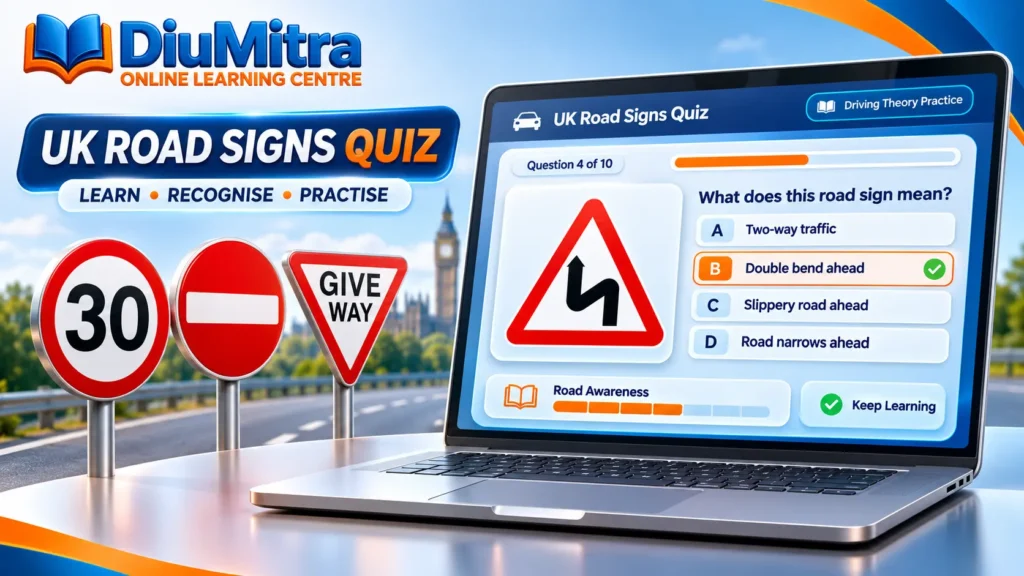
Start the Free UK Road Signs Quiz
Begin with ten illustrated road-sign questions. Select the meaning you think is correct, read the explanation, then move to the next sign. Your answers stay in this browser session; the short practice does not ask for an account.
What does this sign mean?
If the quiz does not load, please use the official Highway Code traffic signs guide or explore the DiuMitra visual sign library below.
How to Read UK Road Signs
The UK signing system groups signs by the job they do: giving orders, warning of hazards or supplying information. Understanding the basic shapes makes it easier to interpret unfamiliar signs.
Circles give orders
Red rings usually indicate a restriction or prohibition. Blue circles generally give a positive instruction, such as going ahead only or using a specified route.
Triangles warn
Red-bordered triangular signs generally alert you to hazards such as traffic signals, bends or junctions. Look at the symbol and respond to conditions safely.
Rectangles inform
Rectangular signs commonly give information or directions. Colours can also matter: motorway directions use blue signs, and primary routes use green.
More Road Signs, Signals and Markings
After the ten-question starter, explore the DiuMitra visual sign library and any available topic assessment. The independent starter above remains usable even when the extended reference collection is unavailable.
Road Signs, Signals & Markings
Learn from governed Highway Code visual assets, then use visual self-check and the full topic assessment.
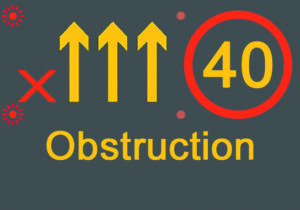
Leave motorway at next exit
Governed local copy
Open related Highway Code reference
Signals to other road users
Governed local copy
Open related Highway Code reference


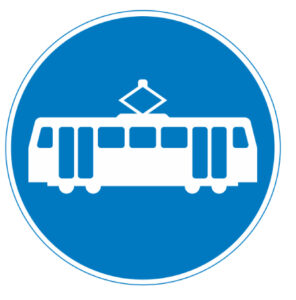


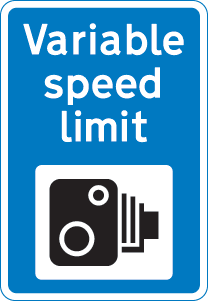

Complete official reference
The Highway Code
England, Scotland and Wales · governed DiuMitra reference copy
Annex 3. Motor vehicle documentation and learner driver requirements
Documents
Driving licence. You MUST have a valid driving licence for the category of motor vehicle you are driving. You MUST inform the Driver and Vehicle Licensing Agency (DVLA) if you change your name and/or address.
Law RTA 1988 sects 87 & 99(4)
Holders of non-European Community licences who are now resident in the UK may only drive on that licence for a maximum of 12 months from the date they become resident in this country.
To ensure continuous driving entitlement
- a British provisional licence should be obtained and a driving test(s) passed before the 12-month period elapses, or
- in the case of a driver who holds a licence from a country which has been designated in law for licence exchange purposes, the driver should exchange the licence for a British one.
MOT. Cars and motorcycles MUST normally pass an MOT test three years from the date of the first registration and every year after that. You MUST NOT drive a motor vehicle without an MOT certificate when it should have one. Exceptionally, you may drive to a pre-arranged test appointment or to a garage for repairs required for the test. Driving an unroadworthy motor vehicle may invalidate your insurance.
From 20 May 2018, cars, vans, motorcycles and other light passenger vehicles manufactured or first registered over 40 years ago, will be exempt from the MOT test, unless the vehicle has been substantially changed within the previous 30 years. Guidance on what counts as a substantial change can be found at www.gov.uk/historic-vehicles.
If a vehicle that’s currently exempt from the MOT test is substantially changed, the vehicle keeper cannot continue to claim an exemption from the MOT test.
Law RTA 1988 sects 45, 47, 49 & 53
Insurance. To use a motor vehicle on the road, you MUST have a valid insurance policy. This MUST at least cover you for injury or damage to a third party while using that motor vehicle. Before driving any motor vehicle, make sure that it has this cover for your use or that your own insurance provides adequate cover. You MUST NOT drive a motor vehicle without insurance. Also, be aware that even if a road traffic incident is not your fault, you may still be held liable by insurance companies.
Uninsured drivers can now be automatically detected by roadside cameras. Further to the penalties for uninsured driving (see ‘Penalty table’), an offender’s vehicle can now be seized by the Police, taken away and crushed.
Law RTA 1988 sects 165a & 165b
The types of cover available are indicated below:
Third-Party insurance - this is often the cheapest form of insurance, and is the minimum cover required by law. It covers anyone you might injure or whose property you might damage. It does not cover damage to your own motor vehicle or injury to yourself.
Third-Party, Fire and Theft insurance - similar to third-party, but also covers you against your motor vehicle being stolen, or damaged by fire.
Comprehensive insurance - this is the most expensive but the best insurance. Apart from covering other persons and property against injury or damage, it also covers damage to your own motor vehicle, up to the market value of that vehicle, and personal injury to yourself.
Registration certificate. Registration certificates (also called harmonised registration certificates) are issued for all motor vehicles used on the road, describing them (make, model, etc) and giving details of the registered keeper. You MUST notify the Driver and Vehicle Licensing Agency in Swansea as soon as possible when you buy or sell a motor vehicle, or if you change your name or address. The buyer and seller are responsible for completing the registration certificates. The seller is responsible for forwarding them to DVLA. The procedures are explained on the back of the registration certificates.
Law RV(R&L)R regs 21, 22, 23 & 24
Vehicle Excise Duty (VED). Vehicle Excise Duty MUST be paid on all motor vehicles used or kept on public roads.
Law VERA sects 29 and 33
Statutory Off-Road Notification (SORN). This is a notification to the DVLA that a motor vehicle is not being used on the road. If you are the vehicle keeper and want to keep a motor vehicle untaxed and off the public road you MUST declare SORN - it is an offence not to do so. The vehicle will remain SORN until you sell, tax or scrap it. If your vehicle is unused or off the road it MUST have either a SORN declaration or valid insurance.
Production of documents. You MUST be able to produce your driving licence, a valid insurance certificate and (if appropriate) a valid MOT certificate, when requested by a police officer. If you cannot do this you may be asked to take them to a police station within seven days.
Law RTA 1988 sects 164 & 165
Learner drivers
Learners driving a car MUST hold a valid provisional licence. They MUST be supervised by someone at least 21 years old who holds a full EC/EEA licence for that type of car (automatic or manual) and has held one for at least three years.
Laws MV(DL)R reg 16 & RTA 1988 sect 87
Vehicles. Any vehicle driven by a learner MUST display red L plates. In Wales, either red D plates, red L plates, or both, can be used. Plates MUST conform to legal specifications and MUST be clearly visible to others from in front of the vehicle and from behind. Plates should be removed or covered when not being driven by a learner (except on driving school vehicles).
Law MV(DL)R reg 16 & sched 4
You MUST pass the theory test (if one is required) and then a practical driving test for the category of vehicle you wish to drive before driving unaccompanied.
Law MV(DL)R reg 40
Road signs topic test
Road and traffic signs — Topic Practice
If the extended sign collection is unavailable, continue with the official Highway Code traffic signs reference while the learning catalogue is updated.
Road Signs People Commonly Confuse
Several signs can appear similar at first glance. In the quiz, read the shape, colour, symbol and any words or plates rather than guessing from one feature.
No waiting vs no stopping
The red diagonal line through a blue circle means no waiting; a red X means no stopping. Check nearby plates and road markings for the full restriction.
Ahead only vs one way
A white upward arrow inside a blue circle gives an ahead-only instruction. The arrow inside a blue rectangle indicates one-way traffic.
No entry vs give way
No Entry restricts vehicular entry. Give Way means approaching traffic on the major road has priority; you may need to stop before proceeding.
How to Practise Road Signs Effectively
Try a short focused session, understand mistakes immediately and return to official sources. DiuMitra’s starter activity does not grade your readiness for the real driving theory test.
Look at the whole sign
Notice whether the sign is circular, triangular or rectangular. Check the symbol, numbers and any additional text beneath it.
Choose the best meaning
Select one answer without looking it up first. The activity shows an explanation and identifies the correct answer after you choose.
Review and repeat
Use the Highway Code when uncertain, especially for restrictions and exceptions. Repeat the quiz to check whether the explanations make sense.
UK Road Sign Categories at a Glance
Signs work together with road markings, signals and supplementary plates. This overview helps you decide which official section to study next.
| Type of sign | What it generally tells you | Typical examples |
|---|---|---|
| Regulatory / order signs | What you must do, or what you must not do | STOP, Give Way, No Entry, maximum speed, Ahead Only |
| Warning signs | Hazards or road conditions to anticipate | Traffic signals ahead, bends, junctions |
| Direction and information signs | Routes, destinations, road layout or facilities | One-way traffic, direction boards, motorway information |
| Supplementary plates | Extra details that qualify a main sign | Times, distances, vehicle restrictions |
| Road markings and signals | Additional instructions or information on the road | Stop lines, lane arrows, traffic lights |
Official UK Road Signs and Revision Resources
This quiz uses original schematic sign drawings and independently written explanations based on published traffic-sign guidance. Signs, restrictions and test arrangements can change, so the official guidance remains the source for current requirements.
For learner drivers
Build visual recognition alongside the wider road rules, observations and safe decision-making needed for the GB car theory test. Traffic signs are one topic within the overall assessment.
Continue with Driving Theory Practice Tests and Driving Theory Study Course lessons.
For road users refreshing their knowledge
Use the quiz to recognise sign meanings, then check official explanations. Never assume an image alone gives every detail of a road restriction; signs may be paired with plates, road markings or location-specific arrangements.
Northern Ireland has its own official arrangements and some differences. Follow the relevant local authority guidance.
UK Road Signs Quiz FAQs
Clear answers about signs, free practice, official study material and how DiuMitra’s activities differ from a real driving theory examination.
Recognise the Sign. Understand the Rule.
Start the free visual road signs quiz, check unfamiliar signs against official guidance and continue with Driving Theory Practice Tests when you are ready. Consistent revision matters more than memorising one set of answers.
DiuMitra provides independent learning resources only. This quiz is not an official DVSA examination, and it does not guarantee a theory test pass.