
UK Road Signs Quiz: Free Visual Practice
Take this UK road signs quiz to practise recognising common British traffic signs. Answer ten original, illustrated questions, check each explanation and learn the difference between signs that give orders, warn of danger or provide information. Use the current Highway Code to confirm any rule before driving.
Independent DiuMitra revision for England, Scotland and Wales. Not an official DVSA examination or substitute for the current Highway Code.
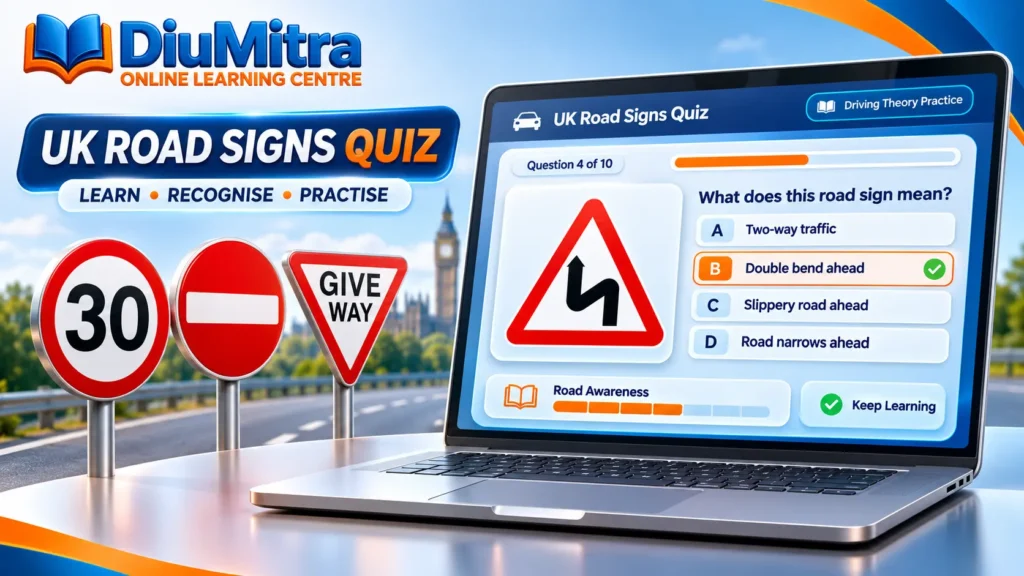
Start the Free UK Road Signs Quiz
Begin with ten illustrated road-sign questions. Select the meaning you think is correct, read the explanation, then move to the next sign. Your answers stay in this browser session; the short practice does not ask for an account.
What does this sign mean?
If the quiz does not load, please use the official Highway Code traffic signs guide or explore the DiuMitra visual sign library below.
How to Read UK Road Signs
The UK signing system groups signs by the job they do: giving orders, warning of hazards or supplying information. Understanding the basic shapes makes it easier to interpret unfamiliar signs.
Circles give orders
Red rings usually indicate a restriction or prohibition. Blue circles generally give a positive instruction, such as going ahead only or using a specified route.
Triangles warn
Red-bordered triangular signs generally alert you to hazards such as traffic signals, bends or junctions. Look at the symbol and respond to conditions safely.
Rectangles inform
Rectangular signs commonly give information or directions. Colours can also matter: motorway directions use blue signs, and primary routes use green.
More Road Signs, Signals and Markings
After the ten-question starter, explore the DiuMitra visual sign library and any available topic assessment. The independent starter above remains usable even when the extended reference collection is unavailable.
Road Signs, Signals & Markings
Learn from governed Highway Code visual assets, then use visual self-check and the full topic assessment.
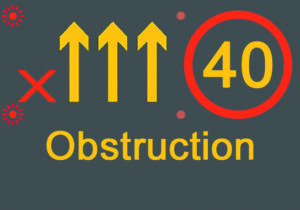
Leave motorway at next exit
Governed local copy
Open related Highway Code reference
Signals to other road users
Governed local copy
Open related Highway Code reference





Complete official reference
The Highway Code
England, Scotland and Wales · governed DiuMitra reference copy
Rule 275
If you need to stop your vehicle in the event of a breakdown or incident, try to stop in a place of relative safety. A place of relative safety is where you, your passengers and your vehicle are less likely to be at risk from moving traffic.
The safest place to stop is a location which is designed for parking. On motorways and other high-speed roads, the safest place to stop is a service area. Other places of relative safety include
Be aware that hard shoulders provide less protection than other places of relative safety because they are so close to high-speed traffic.
You and your passengers should, where possible, keep well away from your vehicle and moving traffic. Otherwise moving traffic could collide with your vehicle, forcing it into you and your passengers.
Breakdowns (rule 276)
Rule 276
If your vehicle breaks down, think first of all other road users and
- get your vehicle off the road if possible
- warn other traffic by using your hazard warning lights if your vehicle is causing an obstruction
- help other road users see you by wearing light-coloured or fluorescent clothing in daylight and reflective clothing at night or in poor visibility
- put a warning triangle on the road at least 45 metres (147 feet) behind your broken-down vehicle on the same side of the road, or use other permitted warning devices if you have them. Always take great care when placing or retrieving them, but never use them on motorways
- if possible, keep your sidelights on if it is dark or visibility is poor
- do not stand (or let anybody else stand) between your vehicle and oncoming traffic
- at night or in poor visibility do not stand where you will prevent other road users seeing your lights
Additional rules for motorways (rules 277 to 278)
Rule 277
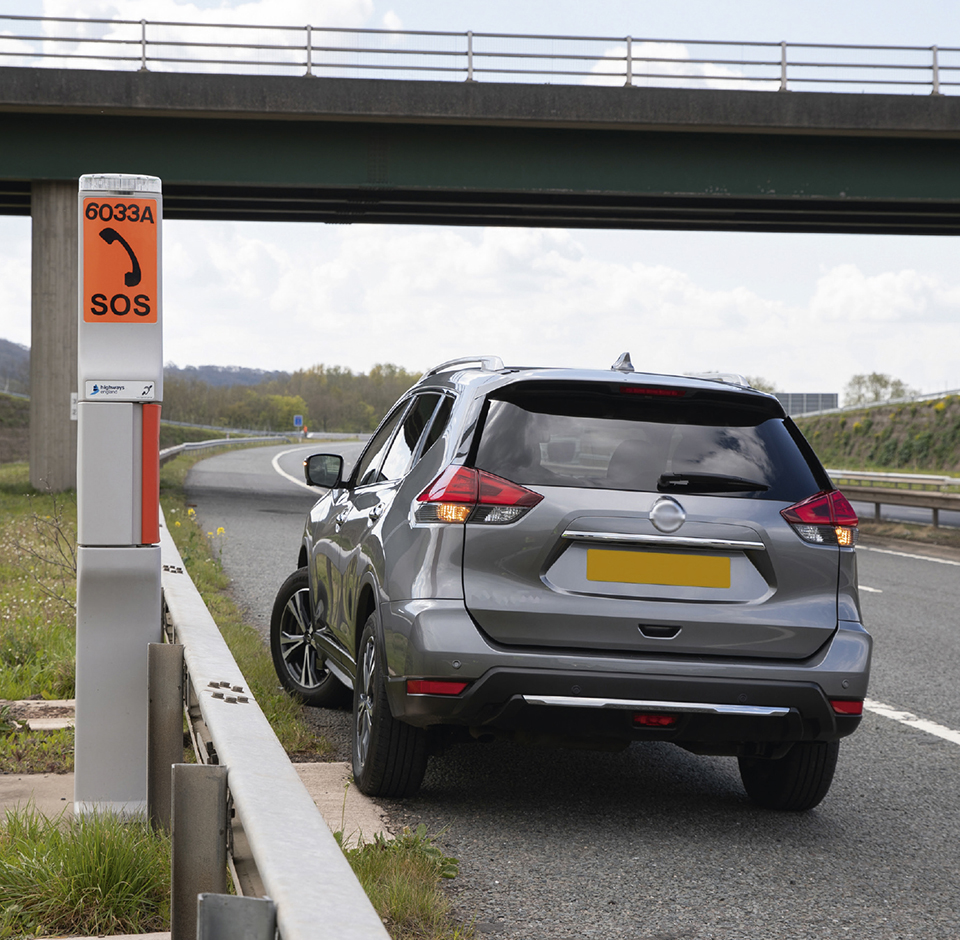
If your vehicle develops a problem, leave the carriageway at the next exit or pull into a service area if possible (see Rule 275 for places of relative safety). If you cannot, you should
Go left
- move into the left lane
- pull into an emergency area or onto a hard shoulder if you can
- stop as far to the left as possible, leaving space to exit your vehicle and with your wheels turned to the left
- if you can, stop just beyond an emergency telephone
- switch your hazard warning lights on
- if itâs dark or visibility is poor, use sidelights.
Get safe
- exit your vehicle by the side furthest from traffic, if it is safe and possible to do so, and ensure passengers do the same
If you canât
- get your vehicle to the left lane or a place of relative safety (see Rule 275), and
- exit your vehicle safely to get well away from it and moving traffic,
you should
- stay in your vehicle
- keep your seat belts and hazard warning lights on
- call 999 immediately and ask for the police. Alternatively, press your SOS button if your vehicle has one and ask for the police.
- put on high-visibility clothing if you have it and it is within easy reach
- get behind a safety barrier where there is one, but be aware of any unseen hazards such as sudden drops, uneven ground or debris
- DO NOT stand in a place where your vehicle could be forced into you if moving traffic collides with it
- DO NOT return to your vehicle even if itâs raining, cold or dark
- remain alert and aware of vehicles or debris coming towards you
- keep passengers away from the carriageway and children under control
- DO NOT attempt repairs on your vehicle
- DO NOT place a warning triangle on the carriageway
- animals MUST be kept in the vehicle or, in an emergency, under control on the verge.

Rule 278
To rejoin the carriageway after a breakdown from
- a hard shoulder, build up speed, indicate and watch for a safe gap in the traffic. Be aware that vehicles, obstructions or debris may be present on the hard shoulder
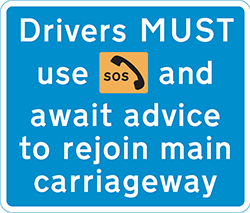
- an emergency area, you MUST use the emergency telephone provided and follow the operatorâs advice for exiting the emergency area. A lane may need to be closed so that you can rejoin the carriageway safely.

Rule 279
Disabled drivers. If you have a disability that prevents you from following the above advice in Rules 277 and 278, you should
- switch on your hazard warning lights
- stay in your vehicle and keep your seat belt on
- call 999 immediately and ask for the police. Alternatively, press your SOS button if your vehicle has one and ask for the police.
If you are deaf, hard of hearing or speech impaired, it is recommended that you register for the 999 text service (emergencySMS.net) before making a journey.
Obstructions (rule 280)
Rule 280
If anything falls from a vehicle on to a motorway or other high-speed road, DO NOT remove the obstruction yourself. Stop in a place of relative safety (see Rule 275) and call the emergency services on 999.
On other roads, you should only remove obstructions if it is safe to do so.
Incidents (rules 281 to 283)
Rule 281
Warning signs or flashing lights. If you see emergency or incident support vehicles displaying flashing lights in the distance, be aware there may be an incident ahead (see Rule 219). You should slow down and be prepared to move safely into another lane or stop.
The emergency services, traffic officers and recovery workers may be required to work in the carriageway; for example, dealing with debris, collisions or conducting rolling roadblocks. You MUST follow any directions given by police or traffic officers as to whether you can safely pass the incident or obstruction.
Laws RTA 1988 sects 35 & 163 as amended by TMA sect 6
Rule 282
When passing the scene of an incident, remain alert for hazards (such as debris or slow-moving vehicles) and do not slow down unnecessarily (for example, if an incident is on the other side of a dual carriageway). You should focus on the road ahead when passing an incident because a lack of attention may cause a further incident, collision or congestion (see also Rule 283, below).
Rule 283
If you are involved in an incident or collision or stop to give assistance
- if possible, stop in a place of relative safety (see Rule 275)
- use your hazard warning lights to warn other traffic
- put on high-visibility clothing if you have it
- ask drivers to switch off their engines
- ask drivers and passengers to stop smoking
- contact the emergency services on 999 and provide full details of the incident location and any casualties. Use an emergency telephone, a mobile telephone, or press the SOS button if your vehicle has one (see Rule 277 on how to identify your location on a motorway or other high-speed road)
- move uninjured people away from the vehicles to a place of relative safety (see Rule 275)
- DO NOT move injured people from their vehicles unless they are in immediate danger
- DO NOT remove a motorcyclistâs helmet unless it is essential and you are trained to do so
- be prepared to give first aid (see First aid on the road and Useful websites)
- stay at the scene until the emergency services arrive
- be prepared to exchange details (see Rule 286).
If you are involved in any other medical emergency, you should contact the emergency services in the same way.
Incidents involving dangerous goods (rules 284 to 285)
Rule 284
Vehicles carrying dangerous goods in packages will be marked with plain orange reflective plates. Road tankers and vehicles carrying tank containers of dangerous goods will have hazard warning plates (see âVehicle markingsâ).
Rule 285
If an incident involves a vehicle containing dangerous goods, follow the advice in Rule 283 and, in particular
- switch off engines and DO NOT SMOKE
- keep well away from the vehicle and do not be tempted to try to rescue casualties as you yourself could become one
- call the emergency services and give as much information as possible about the labels and markings on the vehicle. DO NOT use a mobile phone close to a vehicle carrying flammable loads.
Documentation (rules 286 to 287)
Rule 286
If you are involved in a collision which causes damage or injury to any other person, vehicle, animal or property, you MUST
- stop. If possible, stop in a place of relative safety (see Rule 275
- give your own and the vehicle ownerâs name and address, and the registration number of the vehicle, to anyone having reasonable grounds for requiring them
- if you do not give your name and address at the time of the collision, report it to the police as soon as reasonably practicable, and in any case within 24 hours.
Rule 287
If another person is injured and you do not produce your insurance certificate at the time of the crash to a police officer or to anyone having reasonable grounds to request it, you MUST
- report it to the police as soon as possible and in any case within 24 hours
- produce your insurance certificate for the police within seven days.
Road signs topic test
Road and traffic signs — Topic Practice
If the extended sign collection is unavailable, continue with the official Highway Code traffic signs reference while the learning catalogue is updated.
Road Signs People Commonly Confuse
Several signs can appear similar at first glance. In the quiz, read the shape, colour, symbol and any words or plates rather than guessing from one feature.
No waiting vs no stopping
The red diagonal line through a blue circle means no waiting; a red X means no stopping. Check nearby plates and road markings for the full restriction.
Ahead only vs one way
A white upward arrow inside a blue circle gives an ahead-only instruction. The arrow inside a blue rectangle indicates one-way traffic.
No entry vs give way
No Entry restricts vehicular entry. Give Way means approaching traffic on the major road has priority; you may need to stop before proceeding.
How to Practise Road Signs Effectively
Try a short focused session, understand mistakes immediately and return to official sources. DiuMitra’s starter activity does not grade your readiness for the real driving theory test.
Look at the whole sign
Notice whether the sign is circular, triangular or rectangular. Check the symbol, numbers and any additional text beneath it.
Choose the best meaning
Select one answer without looking it up first. The activity shows an explanation and identifies the correct answer after you choose.
Review and repeat
Use the Highway Code when uncertain, especially for restrictions and exceptions. Repeat the quiz to check whether the explanations make sense.
UK Road Sign Categories at a Glance
Signs work together with road markings, signals and supplementary plates. This overview helps you decide which official section to study next.
| Type of sign | What it generally tells you | Typical examples |
|---|---|---|
| Regulatory / order signs | What you must do, or what you must not do | STOP, Give Way, No Entry, maximum speed, Ahead Only |
| Warning signs | Hazards or road conditions to anticipate | Traffic signals ahead, bends, junctions |
| Direction and information signs | Routes, destinations, road layout or facilities | One-way traffic, direction boards, motorway information |
| Supplementary plates | Extra details that qualify a main sign | Times, distances, vehicle restrictions |
| Road markings and signals | Additional instructions or information on the road | Stop lines, lane arrows, traffic lights |
Official UK Road Signs and Revision Resources
This quiz uses original schematic sign drawings and independently written explanations based on published traffic-sign guidance. Signs, restrictions and test arrangements can change, so the official guidance remains the source for current requirements.
For learner drivers
Build visual recognition alongside the wider road rules, observations and safe decision-making needed for the GB car theory test. Traffic signs are one topic within the overall assessment.
Continue with Driving Theory Practice Tests and Driving Theory Study Course lessons.
For road users refreshing their knowledge
Use the quiz to recognise sign meanings, then check official explanations. Never assume an image alone gives every detail of a road restriction; signs may be paired with plates, road markings or location-specific arrangements.
Northern Ireland has its own official arrangements and some differences. Follow the relevant local authority guidance.
UK Road Signs Quiz FAQs
Clear answers about signs, free practice, official study material and how DiuMitra’s activities differ from a real driving theory examination.
Recognise the Sign. Understand the Rule.
Start the free visual road signs quiz, check unfamiliar signs against official guidance and continue with Driving Theory Practice Tests when you are ready. Consistent revision matters more than memorising one set of answers.
DiuMitra provides independent learning resources only. This quiz is not an official DVSA examination, and it does not guarantee a theory test pass.