
Times Tables Games for Kids: Play & Practise
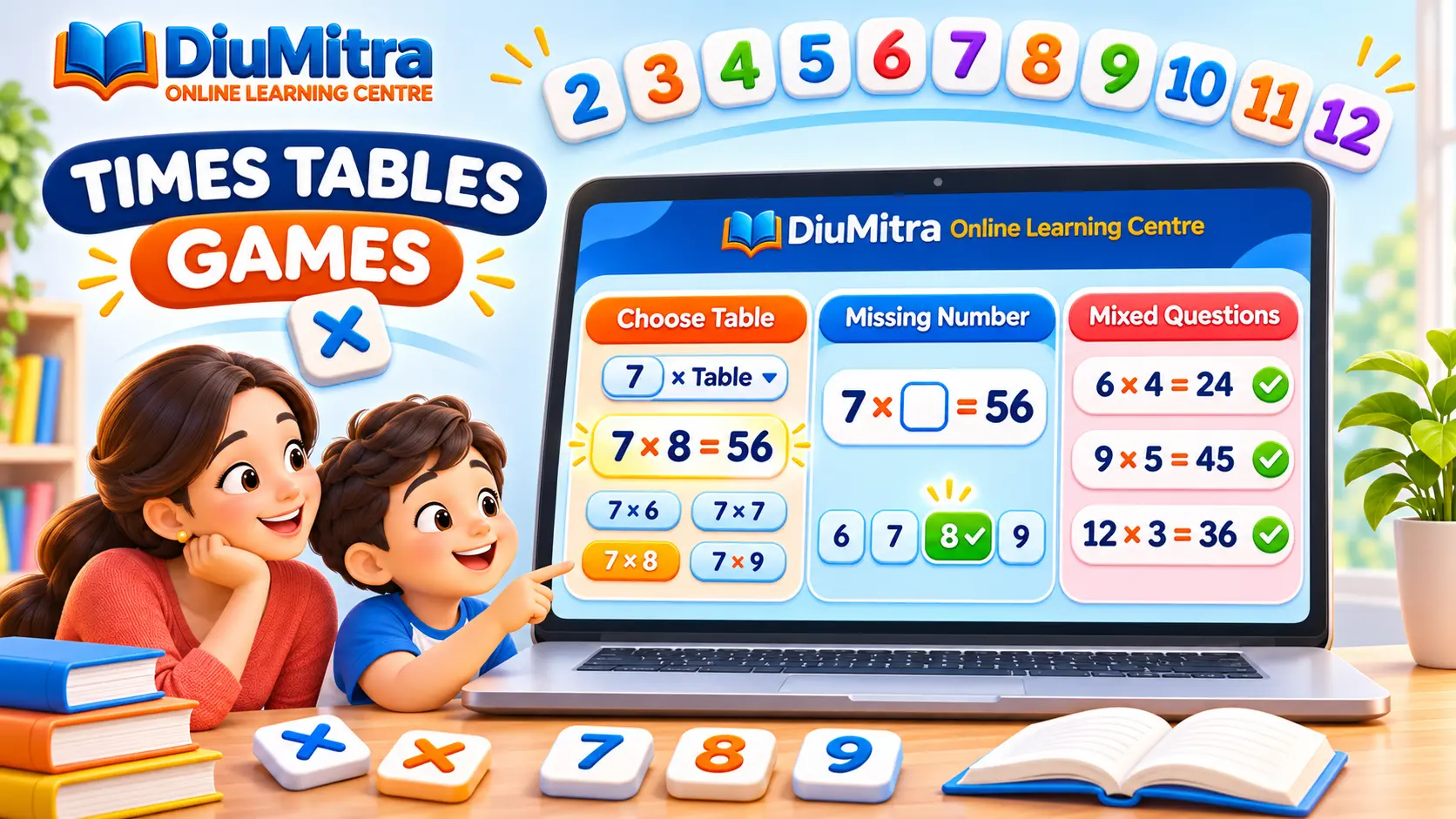
Times tables games help children practise multiplication facts from 2 to 12 through short, interactive questions. Choose one table, fill in missing numbers or try a mixed challenge. These free multiplication practice games give instant explanations and let children repeat tricky facts at their own pace, with adult support when helpful.
These on-page games are free and untimed. Scores reset when you restart or reload; they are not official school assessments.
Learn Multiplication Through Short Games
A multiplication fact is a way to describe equal groups. Children can build the idea with objects and pictures before working towards fluent recall.
For example, three groups of four make twelve, so 3 × 4 = 12. Recognising equal groups helps children see what a multiplication question means rather than relying only on memorisation.
The games on this page focus on one skill: multiplication tables. For counting, number bonds and other mathematics topics, explore the separate Maths Games for Kids page.
Which Times Tables Game Should You Play?
Start with a familiar table, practise the missing number or combine facts from across the 2 to 12 times tables. All three modes are playable below.
Pick One Table
Choose a table from 2 to 12 and practise eight multiplication facts in a row.
Missing Number
Work out a missing factor in a multiplication equation.
Mixed Challenge
Try ten questions from different tables, including unfamiliar combinations.
Instant Explanations
Check the correct answer after every question and talk about how to work it out.
Play Free Times Tables Games from 2 to 12
Pick a mode and answer each multiplication question. Every answer reveals a simple explanation. The games are untimed and reset whenever you start again.
Choose a times tables game
2 × 2 = ?
Choose an answer to check your thinking.
This game requires JavaScript. If the answer buttons do not appear, please enable JavaScript in your browser.
Free browser-based practice: no timer, leaderboard or saved child profile. These games are independent learning activities, not the official Year 4 Multiplication Tables Check.
Which Times Tables Should Children Practise First?
The order is a suggestion, not a fixed rule. Start where the child is comfortable and revisit earlier facts when necessary.
| Suggested starting point | Examples | Useful way to practise |
|---|---|---|
| 2, 5 and 10 times tables | 2 × 7 = 14; 5 × 6 = 30 | Count in twos, fives and tens using objects or a number line. |
| 3, 4 and 8 times tables | 3 × 4 = 12; 8 × 3 = 24 | Draw equal groups and use repeated doubling where helpful. |
| 6, 7 and 9 times tables | 6 × 7 = 42; 9 × 4 = 36 | Connect unfamiliar facts to combinations already known. |
| 11 and 12 times tables | 11 × 7 = 77; 12 × 8 = 96 | Build from ten groups plus one or two extra groups. |
| Mix tables 2–12 | 7 × 8 = 56; 9 × 12 = 108 | Switch between tables to practise recalling a fact without a predictable sequence. |
How to Use Times Tables Games Effectively
Short, relaxed practice sessions can help children connect the meaning of multiplication with recalling facts.
Choose a table
Start with one table or pick Mixed Challenge if several are familiar.
Explain the answer
Use equal groups, doubling or a related multiplication fact to understand the result.
Revisit the tricky facts
Repeat after a break and try to remember the answer without a prompt.
Three Simple Times Tables Activities at Home
Games can be paired with real objects, movement and conversations about equal groups.
Make Equal Groups
Put four toys in each of three groups. Count twelve toys, then write 3 × 4 = 12.
Skip-Count Together
Count in fives while taking steps: 5, 10, 15, 20, 25. Ask what five steps of five make.
Build an Array
Place three rows of six small objects on a table. Count the total and turn it into 3 × 6 = 18.
Privacy, Scores and Adult Support
These on-page games do not ask for a child’s name, email address or date of birth.
The interactive script keeps only the current selection and score while the page is open. It does not transmit a child’s answers or create an account. Reloading the page resets the activity; standard site analytics and privacy policies still apply.
DiuMitra provides independent educational activities, not an official school assessment. Parents and carers should choose an appropriate level, supervise younger learners and use the school’s advice for educational support.
Times Tables Games for Kids: FAQs
Answers for parents and carers about costs, accessibility, learning levels and the difference from official school checks.
Build Times Tables Confidence One Game at a Time
Return to the free multiplication games whenever you like, or explore the wider DiuMitra Kids Learning hub for other activities. Parents and carers can contact DiuMitra for help finding suitable learning resources.
Younger children should play with adult support. These games are independent practice and do not replace teaching or official school checks.