
UK Road Signs Quiz: Free Visual Practice
Take this UK road signs quiz to practise recognising common British traffic signs. Answer ten original, illustrated questions, check each explanation and learn the difference between signs that give orders, warn of danger or provide information. Use the current Highway Code to confirm any rule before driving.
Independent DiuMitra revision for England, Scotland and Wales. Not an official DVSA examination or substitute for the current Highway Code.
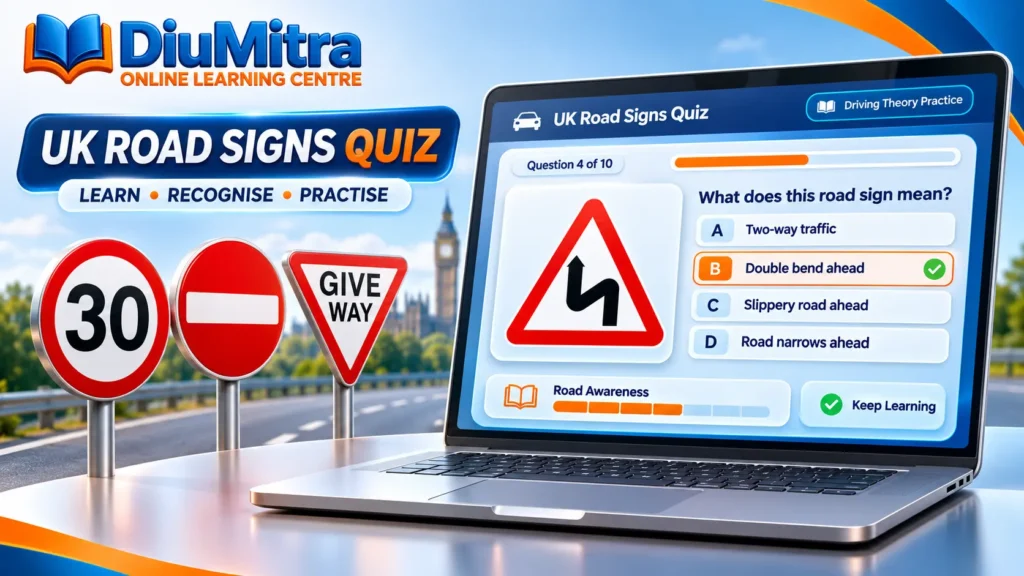
Start the Free UK Road Signs Quiz
Begin with ten illustrated road-sign questions. Select the meaning you think is correct, read the explanation, then move to the next sign. Your answers stay in this browser session; the short practice does not ask for an account.
What does this sign mean?
If the quiz does not load, please use the official Highway Code traffic signs guide or explore the DiuMitra visual sign library below.
How to Read UK Road Signs
The UK signing system groups signs by the job they do: giving orders, warning of hazards or supplying information. Understanding the basic shapes makes it easier to interpret unfamiliar signs.
Circles give orders
Red rings usually indicate a restriction or prohibition. Blue circles generally give a positive instruction, such as going ahead only or using a specified route.
Triangles warn
Red-bordered triangular signs generally alert you to hazards such as traffic signals, bends or junctions. Look at the symbol and respond to conditions safely.
Rectangles inform
Rectangular signs commonly give information or directions. Colours can also matter: motorway directions use blue signs, and primary routes use green.
More Road Signs, Signals and Markings
After the ten-question starter, explore the DiuMitra visual sign library and any available topic assessment. The independent starter above remains usable even when the extended reference collection is unavailable.
Road Signs, Signals & Markings
Learn from governed Highway Code visual assets, then use visual self-check and the full topic assessment.
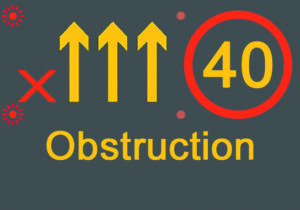
Leave motorway at next exit
Governed local copy
Open related Highway Code reference
Signals to other road users
Governed local copy
Open related Highway Code reference


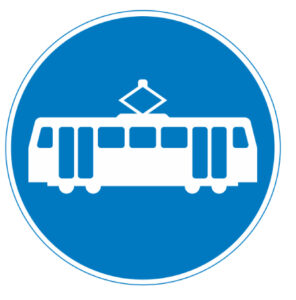


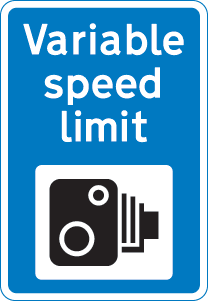

Complete official reference
The Highway Code
England, Scotland and Wales · governed DiuMitra reference copy
Annex 5. Penalties
Penalties and The Highway Code
Parliament sets the maximum penalties for road traffic offences. The seriousness of the offence is reflected in the maximum penalty. It is for the courts to decide what sentence to impose according to circumstances.
The penalty table indicates some of the main offences, and the associated penalties. There is a wide range of other more specific offences which, for the sake of simplicity, are not shown here. The penalty points and disqualification system is described below.
Penalty points and disqualification
The penalty point system is intended to deter drivers and motorcyclists from following unsafe motoring practices. Certain non-motoring offences, e.g. failure to rectify vehicle defects, can also attract penalty points.
The court MUST order points to be endorsed on the licence according to the fixed number or the range set by Parliament. The accumulation of penalty points acts as a warning to drivers and motorcyclists that they risk disqualification if further offences are committed.
A driver or motorcyclist who accumulates 12 or more penalty points within a 3-year period MUST be disqualified. This will be for a minimum period of 6 months, or longer if the driver or motorcyclist has previously been disqualified.
Law RTOA sect 35
For every offence which carries penalty points the court has a discretionary power to order the licence holder to be disqualified. This may be for any period the court thinks fit, but will usually be between a week and a few months.
In the case of serious offences, such as dangerous driving and drink-driving, the court MUST order disqualification. The minimum period is 12 months, but for repeat offenders or where the alcohol level is high, it may be longer. For example, a second drink-drive offence in the space of 10 years will result in a minimum of 3 years’ disqualification.
Law RTOA sect 34
Penalty table
| Offence | Maximum penalty | Penalty points |
|---|---|---|
| Causing death by dangerous driving | Life imprisonment / Unlimited fine / Obligatory - 5 years minimum | 3 to 11 (if exceptionally not disqualified) |
| Dangerous driving | 2 years’ imprisonment / Unlimited fine / Obligatory disqualification | 3 to 11 (if exceptionally not disqualified) |
| Causing death by careless driving under the influence of drink or drugs | Life imprisonment / Unlimited fine / Obligatory - 5 years minimum | 3 to 11 (if exceptionally not disqualified) |
| Careless and inconsiderate driving | Unlimited fine / Discretionary disqualification | 3 to 9 |
| Driving while unfit through drink or drugs or with excess alcohol: or failing to provide a specimen for analysis | 6 months’ imprisonment / Unlimited fine / Obligatory disqualification | 3 to 11 (if exceptionally not disqualified) |
| Failing to stop after an accident or failing to report an accident | 6 months’ imprisonment / Unlimited fine / Discretionary disqualification | 5 to 10 |
| Driving while disqualified | 6 months’ imprisonment (12 months in Scotland) / Unlimited fine / Discretionary disqualification | 6 |
| Driving after refusal or revocation of licence on medical grounds | 6 months’ imprisonment / Unlimited fine / Discretionary disqualification | 3 to 6 |
| Driving without insurance | Unlimited fine / Discretionary disqualification | 6 to 8 |
| Using a vehicle in a dangerous condition | LGV or PCV unlimited, other vehicles £2,500/ Obligatory disqualification if offence committed within 3 years of a previous conviction for a similar offence - 6 months min. Otherwise discretionary | 3 in each case |
| Failure to have proper control of vehicle or full view of the road and traffic ahead | £1,000 fine (£2,500 for PCV or goods vehicle) / Discretionary disqualification | 3 |
| Using a hand-held mobile phone when driving | £1,000 fine (£2,500 for PCV or goods vehicle) / Discretionary disqualification | 6 |
| Driving otherwise than in accordance with a licence | £1,000 fine / Discretionary disqualification | 3 to 6 |
| Speeding | £1,000 fine (£2,500 for motorway offences) / Discretionary disqualification | 3 to 6, or 3 (fixed penalty) |
| Traffic light offences | £1,000 fine / Discretionary disqualification | 3 |
| No MOT certificate | £1,000 fine | - |
| Seat belt offences | £500 fine | - |
| Dangerous cycling | £2,500 fine | - |
| Careless cycling | £1,000 fine | - |
| Cycling on pavement | £500 fine | - |
| Failing to identify driver of vehicle | £1,000 fine / Discretionary disqualification | 6 |
*Where a court disqualifies a person on conviction for one of these offences, it must order an extended retest. The courts also have discretion to order a retest for any other offence which carries penalty points, an extended retest where disqualification is obligatory, and an ordinary test where disqualification is not obligatory.
Furthermore, in some serious cases, the court MUST (in addition to imposing a fixed period of disqualification) order the offender to be disqualified until they pass a driving test. In other cases the court has a discretionary power to order such disqualification. The test may be an ordinary length test or an extended test according to the nature of the offence.
Law RTOA sect 36
New drivers
Special rules as set out below apply for a period of two years from the date of passing their first driving test, to drivers and motorcyclists from
- the UK, EU/EEA, the Isle of Man, the Channel Islands or Gibraltar who passed their first driving test in any of those countries
- other foreign countries who have to pass a UK driving test to gain a UK licence, in which case the UK driving test is treated as their first driving test; and
- other foreign countries who (without needing a test) exchanged their licence for a UK licence and subsequently passed a UK driving test to drive another type of vehicle, in which case the UK driving test is treated as their first driving test. For example a driver who exchanges a foreign licence (car) for a UK licence (car) and who later passes a test to drive another type of vehicle (e.g. an HGV) will be subject to the special rules.
Where a person subject to the special rules accumulates 6 or more penalty points before the end of the 2-year period (including any points acquired before passing the test) their licence will be revoked automatically. To regain the licence they must reapply for a provisional licence and may drive only as a learner until they pass a further driving test (also see Annex 8 – Safety code for new drivers).
Law RT(ND)A
Note. This applies even if they pay for offences by fixed penalty. Drivers in the first group (UK, EU/EEA etc.) who already have a full licence for one type of vehicle are not affected by the special rules if they later pass a test to drive another type of vehicle.
Other consequences of offending
Where an offence is punishable by imprisonment then the vehicle used to commit the offence may be confiscated.
Law SA sects 152, 153, 154 & 155
In addition to the penalties a court may decide to impose, the cost of insurance is likely to rise considerably following conviction for a serious driving offence. This is because insurance companies consider such drivers are more likely to be involved in a collision.
Drivers disqualified for drinking and driving twice within 10 years, or once if they are over 2 and a half times the legal limit, or those who refused to give a specimen, also have to satisfy the Driver and Vehicle Licensing Agency’s Medical Branch that they do not have an alcohol problem and are otherwise fit to drive before their licence is returned at the end of their period of disqualification. Persistent misuse of drugs or alcohol may lead to the withdrawal of a driving licence.
Road signs topic test
Road and traffic signs — Topic Practice
If the extended sign collection is unavailable, continue with the official Highway Code traffic signs reference while the learning catalogue is updated.
Road Signs People Commonly Confuse
Several signs can appear similar at first glance. In the quiz, read the shape, colour, symbol and any words or plates rather than guessing from one feature.
No waiting vs no stopping
The red diagonal line through a blue circle means no waiting; a red X means no stopping. Check nearby plates and road markings for the full restriction.
Ahead only vs one way
A white upward arrow inside a blue circle gives an ahead-only instruction. The arrow inside a blue rectangle indicates one-way traffic.
No entry vs give way
No Entry restricts vehicular entry. Give Way means approaching traffic on the major road has priority; you may need to stop before proceeding.
How to Practise Road Signs Effectively
Try a short focused session, understand mistakes immediately and return to official sources. DiuMitra’s starter activity does not grade your readiness for the real driving theory test.
Look at the whole sign
Notice whether the sign is circular, triangular or rectangular. Check the symbol, numbers and any additional text beneath it.
Choose the best meaning
Select one answer without looking it up first. The activity shows an explanation and identifies the correct answer after you choose.
Review and repeat
Use the Highway Code when uncertain, especially for restrictions and exceptions. Repeat the quiz to check whether the explanations make sense.
UK Road Sign Categories at a Glance
Signs work together with road markings, signals and supplementary plates. This overview helps you decide which official section to study next.
| Type of sign | What it generally tells you | Typical examples |
|---|---|---|
| Regulatory / order signs | What you must do, or what you must not do | STOP, Give Way, No Entry, maximum speed, Ahead Only |
| Warning signs | Hazards or road conditions to anticipate | Traffic signals ahead, bends, junctions |
| Direction and information signs | Routes, destinations, road layout or facilities | One-way traffic, direction boards, motorway information |
| Supplementary plates | Extra details that qualify a main sign | Times, distances, vehicle restrictions |
| Road markings and signals | Additional instructions or information on the road | Stop lines, lane arrows, traffic lights |
Official UK Road Signs and Revision Resources
This quiz uses original schematic sign drawings and independently written explanations based on published traffic-sign guidance. Signs, restrictions and test arrangements can change, so the official guidance remains the source for current requirements.
For learner drivers
Build visual recognition alongside the wider road rules, observations and safe decision-making needed for the GB car theory test. Traffic signs are one topic within the overall assessment.
Continue with Driving Theory Practice Tests and Driving Theory Study Course lessons.
For road users refreshing their knowledge
Use the quiz to recognise sign meanings, then check official explanations. Never assume an image alone gives every detail of a road restriction; signs may be paired with plates, road markings or location-specific arrangements.
Northern Ireland has its own official arrangements and some differences. Follow the relevant local authority guidance.
UK Road Signs Quiz FAQs
Clear answers about signs, free practice, official study material and how DiuMitra’s activities differ from a real driving theory examination.
Recognise the Sign. Understand the Rule.
Start the free visual road signs quiz, check unfamiliar signs against official guidance and continue with Driving Theory Practice Tests when you are ready. Consistent revision matters more than memorising one set of answers.
DiuMitra provides independent learning resources only. This quiz is not an official DVSA examination, and it does not guarantee a theory test pass.