
Beginner English Online Lessons: Learn at Your Own Pace
Beginner English online lessons help adults practise useful words, short sentences and simple reading independently. Start with an everyday conversation, learn familiar vocabulary and answer original questions with explanations. These free self-study activities are designed for people building confidence with basic English, including learners who prefer to repeat exercises at their own pace.
Start with the free sample lesson and eight-question English exercise. Full course access, enrolment and any completion documents depend on the availability of a verified, released course.
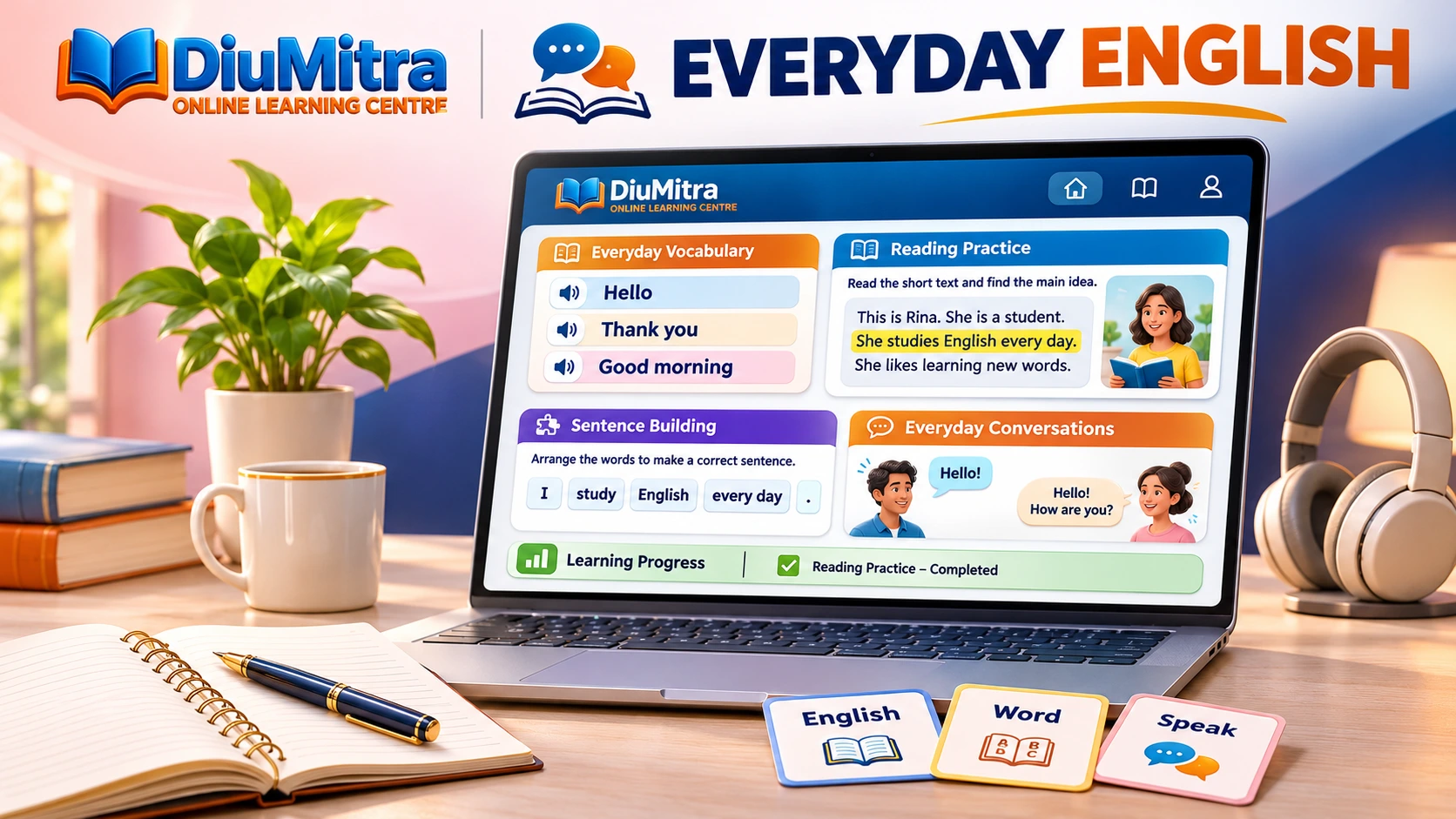
Start Learning Everyday English with Simple Examples
Practise common words, read short messages and improve basic sentence-building through beginner-friendly everyday English exercises. Work at your own pace without booking a live lesson.
Free English Lesson: Read an Everyday Message
Begin with a short message about meeting a friend. Read slowly, notice the important details and open each explanation to understand its meaning.
1. Who is the message for?
The name after “Hello” tells you who Sam is writing to. A greeting often begins a short message or email.
2. When will Sam meet Asha?
The library opens at nine, but the meeting time is ten. Reading carefully helps you tell two times apart.
3. What should Asha bring?
The word “bring” asks someone to take something with them. “Please” makes the request polite.
The sample is original and beginner-friendly. After reading, try the interactive English exercise to practise vocabulary, sentence order and reading comprehension.
Try Eight Everyday English Exercises
Choose the correct word or sentence for simple daily situations. The activity gives immediate explanations, keeps your score on this page only and does not require an account.
Which Everyday English Answer Is Correct?
Eight short English questions help you practise vocabulary, grammar and everyday reading.
Which greeting is most suitable when you meet someone in the morning?
Enable JavaScript to try the English exercise. You can still read the free lesson above without it.
Free learning practice only. The answers and score are calculated in this page; this exercise does not send them to a course account or save a result. No sign-in, microphone or timer is required.
These are fictional everyday examples for self-study, not an accredited English-level assessment or formal ESOL exam. For further free practice, visit the British Council A1 reading resources.
Beginner English Online Lessons: Learning Topics
Explore six introductory topics covering useful vocabulary, simple grammar, reading messages and writing everyday sentences. This page includes a free sample lesson and interactive practice.
| Learning topic | What you practise | Simple take-away |
|---|---|---|
| 1. Greetings and introductions | Hello, good morning, please, thank you, names and simple introductions | Greet someone and introduce yourself politely |
| 2. Family and daily routines | People, home, jobs, days, times and everyday actions | Describe a simple day using familiar words |
| 3. Short sentences and questions | I am, I have, present simple, who, what, when and where | Make a short sentence and ask a clear question |
| 4. Reading everyday messages | Texts, opening times, appointments, signs and short notices | Find the person, place, time and requested action |
| 5. Shopping and community English | Prices, directions, requests, simple service conversations | Ask a polite everyday question |
| 6. Basic writing practice | Short replies, form labels, messages and sentence checking | Write a simple, understandable message |
These study areas are broadly suitable for learners working towards everyday beginner English. They are not a CEFR-level certification, an ESOL qualification or a substitute for an assessed language programme.
How to Practise Everyday English at Your Own Pace
Start with familiar words, read a short example, answer a few questions and revisit anything you find difficult. Small, repeated sessions are often more manageable than trying to memorise everything at once.
Choose a Familiar Situation
Pick a useful topic such as greeting a neighbour, asking about a time or reading an appointment message.
Read a Short Example
Notice the people, place, time and action in the sentence. Open the sample lesson explanations when you need help.
Answer and Check
Try the free exercise and read the reason for each answer. Practise saying or writing your own short sentence afterwards.
Revisit New Words
Read the examples another day, use a small vocabulary notebook and repeat sentences until they feel familiar.
Self-Paced English vs Tutor-Led English Classes
Self-paced study helps you revisit words and short texts when it suits you. Live English classes may be more suitable if you want conversation with a teacher, direct pronunciation feedback or scheduled lessons.
| Independent Everyday English | Live English Classes |
|---|---|
| Read short messages and practise vocabulary in your own time | Join scheduled sessions with an available teacher |
| Repeat short, written exercises and review answer explanations | Practise live conversation and receive tutor feedback where offered |
| Try the free sample without sign-in | Booking, fees and class entry depend on the specific programme |
| Independent language practice, with no formal level certification | Formal ESOL qualification options must be checked with approved providers |
For scheduled, instructor-led learning, see DiuMitra Academy. For other independent subjects, visit DiuMitra Online Courses. This page teaches introductory vocabulary and short reading, not the separate English for UK Life & Work course.
Approachable English Practice with Reliable Learning Links
DiuMitra is a community-led learning platform offering clear English study examples for adults who want to practise independently. The activities are written in accessible English and let you repeat answers without a timer.
The British Council A1–A2 vocabulary resources and A1 reading resources provide additional independent practice. For information about formal English or ESOL learning, see GOV.UK English skills guidance. DiuMitra does not claim accreditation for this practice page.
Beginner English Online Lessons: Common Questions
Find out what you can practise, whether you need an account, how the exercises work and how this independent English page differs from live tuition and formal ESOL classes.
Begin Practising Everyday English Today
Read the free message lesson, complete eight beginner exercises and explore other self-paced learning opportunities. Contact DiuMitra if you need help finding the right learning section.
The free exercise is independent study, not an accredited assessment. Check any full-course listing for confirmed lesson access, fees, enrolment terms and completion documentation.