

This UK Visitor Visa sponsorship 2026 guide is for families and friends in the UK supporting an Indian applicant under the Standard Visitor route. It explains what a sponsor can pay for, which sponsor documents may help, how the applicant’s own evidence still matters, how to structure an invitation letter, and the current £135 fee, three-month application window and eVisa process.
UK Visitor Visa Sponsorship 2026: What Sponsors Need to Know
A UK-based family member, friend or other genuine third party can provide travel, maintenance or accommodation for a Standard Visitor. There is no formal visitor “sponsor licence”, no fixed sponsor income threshold, no £100-per-day rule and no 28-day visitor-funds rule. UKVI looks at whether the support is genuine, affordable and consistent with the applicant’s overall circumstances.
Checked for 2026: this guide follows current GOV.UK Standard Visitor rules, visitor supporting-document guidance, caseworker guidance and the Home Office fee/eVisa updates. Requirements can change, so re-check the official pages before submitting.
What Changed for UK Visitor Visa Sponsorship in 2026?
The sponsor rules themselves have not turned into a separate visa category, but the surrounding visitor process changed in 2026. The short-visit fee increased, UKVI refreshed its visitor evidence guidance, and successful new visa applicants moved to eVisas.
The Home Office increased the fee from £127 to £135 on 8 April 2026.
UKVI stopped issuing vignette stickers to successful new applicants on 1 July 2026.
The official guidance focuses on genuine purpose, sufficient funds, sponsor support and the applicant’s circumstances rather than rigid document bundles.
Each applicant completes a separate application and pays a separate fee, even when one sponsor supports the whole family.
What Does “Sponsoring” a UK Visitor Actually Mean?
For a Standard Visitor, “sponsorship” usually means a third party is providing some or all of the visitor’s travel costs, maintenance or accommodation. It is not the same as employer sponsorship, and the supporter does not need a visitor sponsor licence.
- Accommodation at your UK address, if applicable.
- Flights, local travel or daily costs, if you are paying them.
- Your relationship with the applicant.
- Your ability to provide the promised support while meeting your own commitments.
- Show a genuine permitted reason for visiting.
- Show they will leave the UK at the end of the trip.
- Explain their own personal and economic circumstances.
- Make sure the online form matches the sponsor evidence.
A sponsor cannot guarantee a visa: UKVI assesses the visitor application as a whole. An invitation letter or financial promise is supporting evidence, not a guarantee that the applicant meets the genuine-visitor test.
Who Can Support a UK Standard Visitor?
Current Appendix V allows travel, maintenance and accommodation to be provided by a third party where there is a genuine personal or professional relationship, the supporter can and will provide the support, and a supporter in the UK is not in breach of immigration law. This means support is not limited to British citizens or settled residents.
A Skilled Worker, Student or other lawfully present person can support a visitor if the relationship and support are genuine and affordable.
The relationship should make sense and be explained proportionately. UKVI may consider how the parties know each other and how they communicate.
Third-party endorsements cannot guarantee that the visitor will comply with the rules and are not a substitute for maintenance or accommodation evidence.
If the declared sponsor cannot realistically provide the promised support, UKVI can disregard it or refuse the application.
UK Visitor Visa Sponsor Document Checklist for 2026
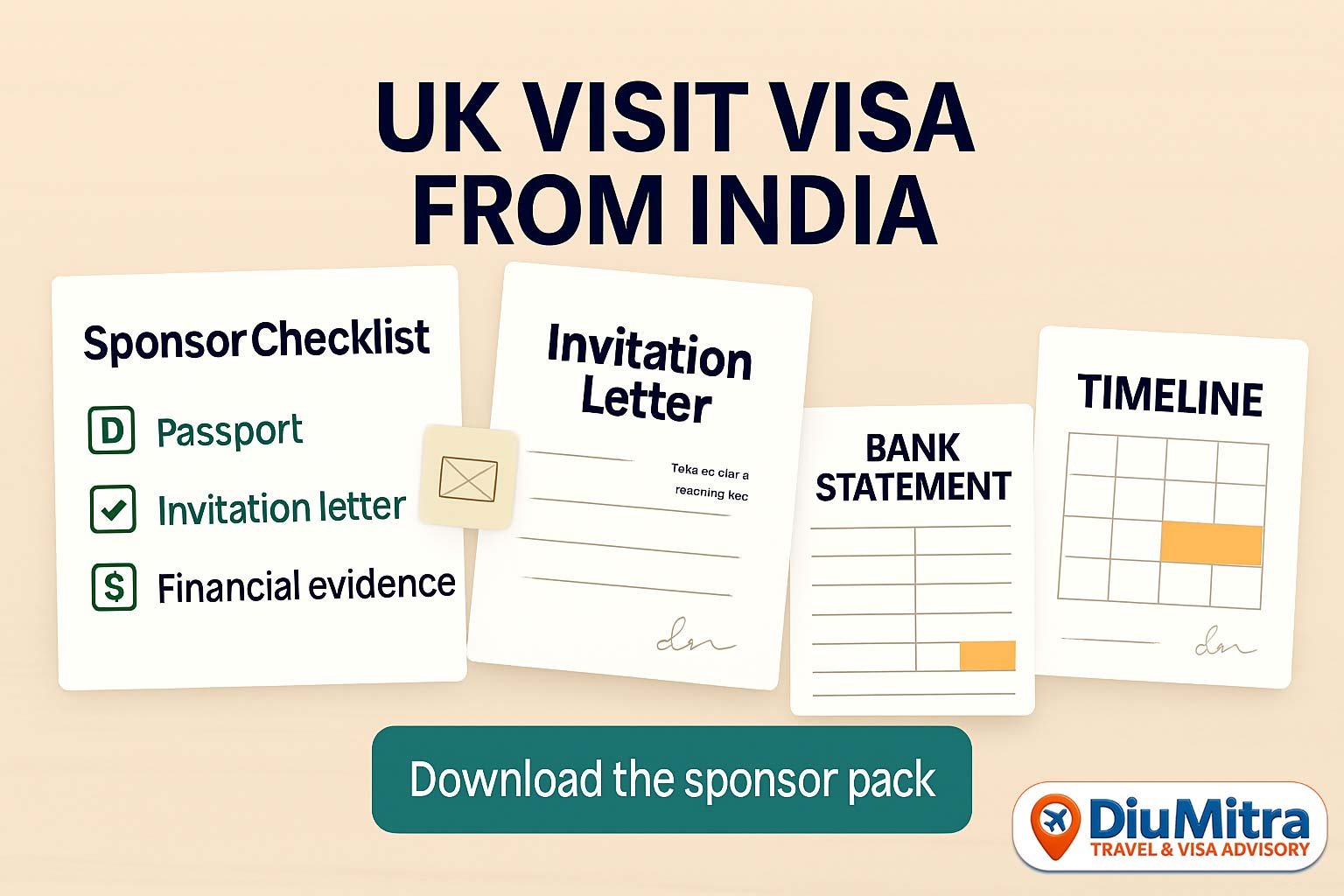
There is no single mandatory “sponsor pack” that every family must submit. Use evidence that proves the support actually declared in the application. The strongest pack is usually concise, current and consistent rather than large.
| What UKVI Needs to Understand | Evidence That May Help | Use It When |
|---|---|---|
| Who the sponsor is | Passport photo page or lawful UK residence evidence | The sponsor is providing accommodation or money and their UK status is relevant. |
| Relationship to the visitor | Birth or marriage records where relevant, or a clear explanation for friends | The relationship is part of the reason the support is credible. |
| What support is offered | Invitation/support letter stating accommodation and costs covered | Whenever the applicant declares third-party support. |
| Ability to afford support | Relevant bank statements, payslips, earnings or business evidence | The sponsor is paying material travel or living costs. |
| Accommodation | Tenancy, mortgage/ownership evidence or other address evidence where useful | The visitor will stay at the sponsor’s home and the arrangement needs explanation. |
| Shared or rented property | Landlord or tenancy permission only where the tenancy requires it or it resolves a genuine question | Do not create unnecessary paperwork if the accommodation arrangement is already clear. |
UKVI does not publish a universal rule requiring two address documents, exactly six months of sponsor statements, bank-stamped evidence or a statement dated within 31 days for Standard Visitors. Evidence should be selected because it supports the facts declared in the application.
How to Write a UK Visitor Visa Invitation Letter
An invitation letter is useful when it explains the family or personal visit clearly, but it is not a prescribed Home Office form. Keep it factual and make sure every statement matches the applicant’s online form and the documents supplied.
Six Points a Sponsor Letter Should Cover
Use this structure as a writing guide. Do not claim that you can guarantee the visitor will leave or that UKVI should approve the application.
Applicant ties belong mainly in the applicant’s evidence. A sponsor can mention known circumstances, but should not invent or “guarantee” employment, property, family ties or departure intentions on the applicant’s behalf.
What Evidence Does the Applicant in India Still Need?
Sponsor documents do not replace the visitor’s own case. UKVI recommends evidence that helps show the applicant’s purpose, circumstances in their home country, access to funds and intention to leave at the end of the visit.
- Valid passport: it must be valid for the whole planned stay in the UK.
- Purpose of visit: evidence relevant to the real family event, holiday or other permitted activity.
- Personal circumstances: employment, education, self-employment or other evidence that explains the applicant’s position in India where relevant.
- Financial evidence: enough accessible funds from the applicant, sponsor or both to cover reasonable trip costs.
- Travel and accommodation details: the online form asks where the applicant intends to stay and how much the trip is expected to cost.
- Translations: documents not in English or Welsh need a full translation meeting the current Home Office requirements.
Financial Sponsorship: How Much Money Should a Sponsor Show?
There is no fixed sponsor income, minimum bank balance or daily spending figure for a Standard Visitor. UKVI asks whether the applicant has sufficient funds for all reasonable costs, and whether any third-party support is genuinely available for the intended stay.
Can the Applicant and Sponsor Share the Costs?
Yes. One person can pay for accommodation while the visitor pays for flights and day-to-day spending, or the sponsor can cover the whole trip. The important point is to state clearly in the form and letter who is paying for what and provide proportionate evidence.
What About Large Recent Deposits?
A large deposit is not automatically a refusal reason, but financial evidence should allow UKVI to understand the origin of funds relied on. If a recent credit materially changes the ability to afford the trip, evidence explaining the source can prevent a mismatch between the application and bank records.
Sponsor Accommodation: What Should You Explain?
If the visitor will stay with the sponsor, the application should explain the address and arrangement clearly. UKVI’s central question is whether credible accommodation is available; it does not prescribe a universal requirement for floor plans, two utility bills or a landlord letter in every case.
- State the full address and the dates the visitor will stay there.
- Explain who normally lives at the property if that is relevant to showing the arrangement is realistic.
- If the property is rented or shared, provide additional permission only when the tenancy or circumstances make that useful.
- If the visitor will use hotels for part of the trip, make sure the accommodation information across the form and supporting letter is consistent.
UK Visitor Visa Sponsorship Application Process in 2026
The applicant and sponsor agree the purpose, dates, accommodation, estimated costs and exactly who pays for each part.
Collect only the documents needed to prove identity/status, relationship, promised support, funds and accommodation.
The applicant can apply up to 3 months before travel and must declare the sponsor and support accurately.
The 2026 short Standard Visitor application fee is £135. Every applicant has their own application and fee.
The applicant follows the visa application centre instructions to prove identity, provide fingerprints/photo and submit supporting evidence.
The current published processing time is usually about 3 weeks after the identity and evidence steps are complete.
Since 1 July 2026, successful new applicants receive an eVisa and should check their UKVI account before travel.
Do not treat an invitation or application submission as approval. Wait for the official decision before relying on non-refundable travel.
Can One Sponsor Support Several Family Members?
Yes, but every visitor must meet the route requirements and complete their own application and fee. GOV.UK says family or group applicants do not need multiple copies of the same supporting documents when applying at the same time, although the evidence should make clear which people the sponsor is supporting and how the costs change for the group.
Common Sponsorship Mistakes That Can Weaken a Visitor Application
Travel dates, address, trip cost and who pays should be consistent across both sides of the application.
The applicant still needs evidence of their own purpose, circumstances and genuine intention to leave the UK.
UKVI can question support if the sponsor cannot reasonably maintain themselves, dependants and the visitor.
Financial evidence should support the income and savings actually declared rather than merely show a high closing balance.
A sponsor should explain facts they know, not attempt to guarantee UKVI compliance on another person’s behalf.
Use the current GOV.UK guidance and choose documents that prove the actual support and circumstances.
UK Visitor Visa Sponsor Checklist 2026
Review the Sponsorship Before the Applicant Submits
This checklist helps you check consistency. It is not a substitute for the current GOV.UK requirements for the individual application.
What Happens After the Sponsored Visitor Visa Is Approved?
Since 1 July 2026, successful new visa applicants receive an eVisa rather than a vignette sticker. The applicant should follow the UKVI decision message, sign in to the UKVI account, check the immigration permission and confirm that the correct travel document is linked before travelling.
The sponsor should keep the accommodation and contact arrangements current, but approval does not remove the visitor’s responsibility to comply with the conditions of their permission or satisfy border checks when travelling.
Official UKVI Sources to Check Before Sponsoring a Visitor
Use These as the Final Reference
Frequently Asked Questions
Need Help Organising a UK Visitor Visa Sponsor Pack?
DiuMitra can explain the current sponsor-support rules, help you organise a proportionate document pack and identify inconsistencies between the sponsor letter and applicant evidence. We do not represent applicants before UKVI or guarantee a visa decision.
⚠️ Disclaimer: All services are offered on an advisory basis only. We do not act as legal, immigration, or financial representatives, and we do not guarantee outcomes. Any actions or applications taken based on our guidance are the sole responsibility of the individual. We connect you with relevant resources and trusted providers where possible, but all arrangements and submissions remain your responsibility.
