
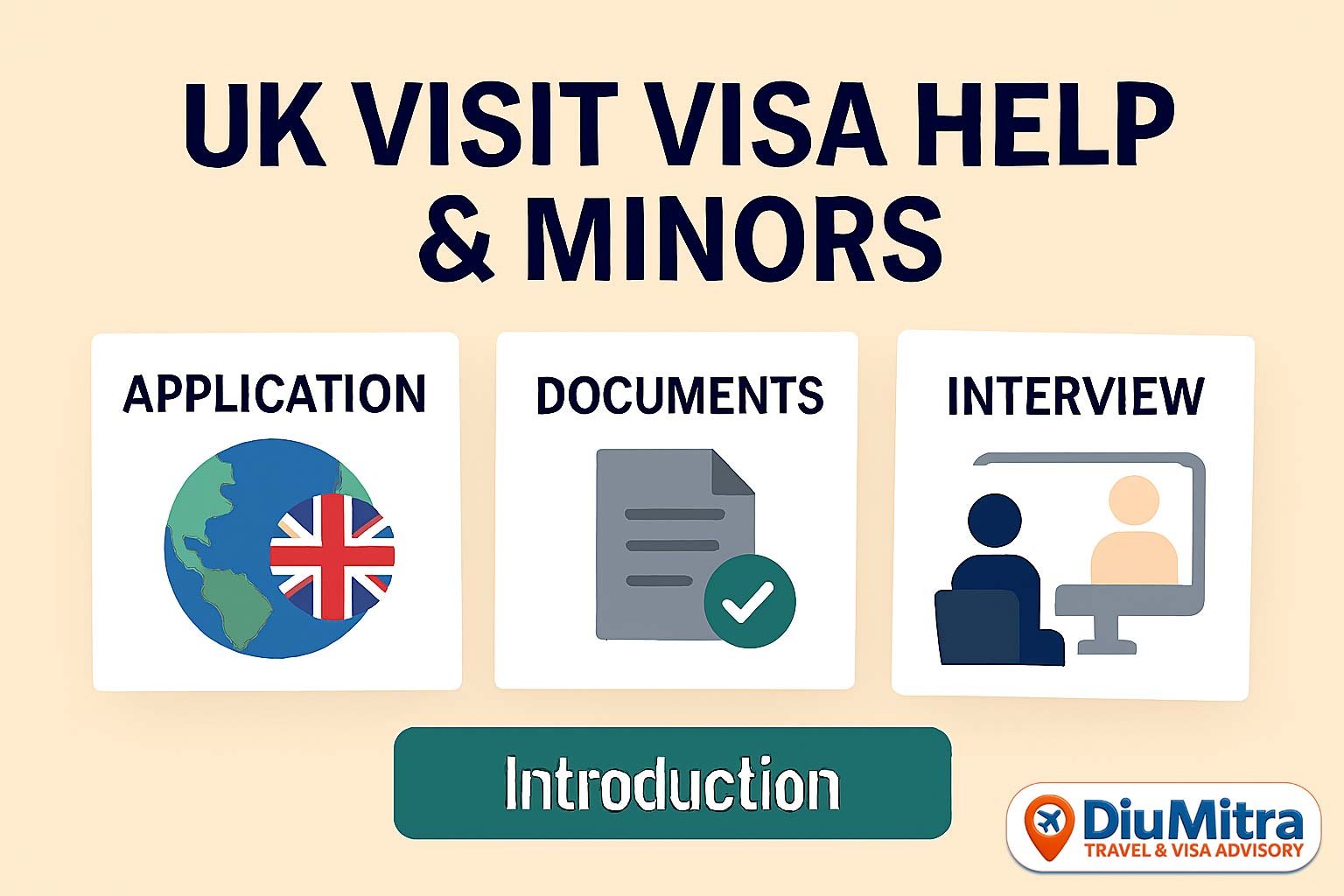
Applying for a UK Visit Visa from India involves a structured 7-step process: creating an online application, paying the updated 2026 fees (starting at £127), booking a VFS Global appointment, and providing clear evidence of your financial stability and intent to return to India.
For most Indian applicants, the Standard Visitor Visa is the correct route for tourism, family visits, or short business trips. In 2026, the standard 6-month visa costs £127 (~₹13,500), with processing taking roughly 3 weeks. Success depends less on how much money you have and more on proving that you are a “genuine visitor” with strong ties to India.
Key Takeaways for 2026
- Updated Fees: The 6-month visa is now £127.
- The 28-Day Rule: Funds must be in your account for 28 days before applying.
- Digital First: Ensure all documents are scanned clearly for the VFS upload.
- Intent Matters: Proving you will leave the UK is the #1 priority for Home Office caseworkers.
Section 1: Understanding the UK Standard Visitor Visa
The UK simplified its visa categories into the Standard Visitor Visa. This single route covers what used to be separate tourist, family, and business visas.
What is Permitted?
- Holidays and tourism.
- Visiting family or friends.
- Attending business meetings, conferences, or site visits.
- Short-term study (under 6 months) at accredited institutions.
What is Prohibited?
- Taking a paid or unpaid job for a UK company.
- Living in the UK through frequent successive visits.
- Accessing public funds (welfare/benefits).
- Marrying or registering a civil partnership (requires a Marriage Visitor Visa).
Section 2: Step-by-Step Application Process in India
Navigating the UKVI (UK Visas and Immigration) system requires precision. Follow these steps to ensure nothing is missed.
Step 1: Create Your Online Application
All applications start at GOV.UK. You will select your language and the country where you are providing biometrics (India).
- Tip: Use an email address you check daily. UKVI will send all updates there.
Step 2: Fill the Form with Clarity
The form asks for personal, financial, and travel history.
- Be Consistent: Ensure your travel dates match your hotel bookings.
- Income Details: List your annual income exactly as it appears on your Income Tax Returns (ITR).
Step 3: Pay the 2026 UK Visa Fees
Fees must be paid online via credit or debit card. In 2026, the Home Office adjusted rates to reflect service improvements.
UK Visit Visa Fee Table (2026 Estimates in INR)
Visa Duration | Fee in GBP | Approx. Fee in INR* |
|---|---|---|
6 Months (Standard) | £127 | ₹13,500 |
2 Years (Long-term) | £475 | ₹50,500 |
5 Years (Long-term) | £848 | ₹90,000 |
10 Years (Long-term) | £1,059 | ₹1,12,000 |
Priority Service (5 days) | +£500 | +₹53,000 |
Super Priority (24 hrs) | +£1,000 | +₹1,06,000 |
*INR rates fluctuate based on the Home Office exchange rate.
Step 4: Book Your VFS Global Appointment
Once you pay, you will be redirected to the VFS Global website. You can choose from centres in Delhi, Mumbai, Bengaluru, Ahmedabad, Chandigarh, Chennai, Kochi, Hyderabad, Kolkata, and Pune.
- Self-Upload: You can upload your documents online for free or pay for VFS to scan them for you at the centre.
Section 3: The Critical Document Checklist
Documentation is the “make or break” of your UK visa application. Indian applicants often face high scrutiny regarding finances.
1. Mandatory Documents
- Valid Passport: Must have at least one blank page (front and back).
- Previous Passports: To show your travel history.
2. Financial Evidence (The “Gold Standard”)
- 6 Months of Bank Statements: Must be stamped/signed by the bank.
- Income Tax Returns (ITR): Usually the last 3 years.
- Salary Slips: Last 3 to 6 months.
- The 28-Day Rule: If you are using a specific lump sum to prove you can afford the trip, that money must have been in your account for at least 28 consecutive days.
3. Proof of Occupation
- Employed: A letter from your employer on letterhead confirming your role, salary, and that your leave is approved.
- Self-Employed: Business registration documents, GST certificates, and business bank statements.
- Retired: Pension statements or proof of assets.
4. Accommodation and Itinerary
- Hotel Bookings: Do not pay for non-refundable tickets until the visa is granted.
- Invitation Letter: If staying with family, a letter from your UK host and a copy of their UK passport/Biometric Residence Permit (BRP).
Expert Guidance: “Many Indian applicants think a high bank balance is enough. It isn’t. The Home Office looks for lifestyle consistency. If you earn ₹50,000 a month but suddenly deposit ₹5 Lakhs, you must explain the source of that deposit or face a ‘Funds Parking’ rejection.” — DiuMitra Senior Advisor.
Explore our advisory services to review your documents
Section 4: Why UK Visas are Refused (and How to Avoid It)
Refusal rates for Indian citizens often hover around 10-15%, usually due to avoidable errors.
1. Weak “Ties to India”
The caseworker’s biggest fear is that you will arrive in the UK and never leave. You must prove you have a reason to return.
- Evidence: Property deeds, family responsibilities, or a stable job.
2. “Funds Parking”
This is the most common financial rejection. It occurs when a large, unexplained sum of money is deposited into the applicant’s account shortly before applying.
- Solution: If you sold property or received a gift, provide a legal affidavit or the sale deed to explain the cash flow.
3. Discrepancy in Figures
If you state your trip will cost ₹2 Lakhs but your monthly disposable income is only ₹10,000, the caseworker will deem the trip “not proportional to your financial circumstances.”
Section 5: Sponsorship – Visiting Family in the UK
If a child or relative in the UK is paying for your trip, the burden of proof shifts.
What the UK Sponsor Needs to Provide:
- Sponsorship Letter: Stating they will provide room, board, and travel costs.
- Financial Proof: 3-6 months of their UK bank statements and payslips.
- Proof of Space: Evidence that their home is not overcrowded (e.g., a council tax bill or tenancy agreement).
- Proof of Status: Copy of their British Passport or ILR/Visa.
Section 6: UK Visit Visa for Minors (Under 18)
Applications for children require extra care to prevent child trafficking concerns.
- Consent Letter: Both parents must sign a consent letter, even if one is travelling with the child.
- Birth Certificate: To prove the relationship.
- School Letter: If travelling during term time, a letter from the school is essential.
Section 7: Final Checklist Before You Submit
- [ ] Did I explain any large deposits in my bank account?
- [ ] Does my cover letter clearly state the purpose and dates of travel?
- [ ] Are all my documents translated into English?
- [ ] Is my passport valid for the duration of the stay?
- [ ] Did I include my ITR for the last 3 years?
FAQ: UK Visit Visa from India
How DiuMitra Can Help
At DiuMitra, we specialise in bridging the gap between India and the UK. While we are not a law firm, our UK-India Advisory Services provide the clarity you need to apply with confidence.
- Document Review: We check your bank statements for “red flags.”
- Template Support: Get access to proven invitation and cover letter templates.
- Cultural Guidance: Tips on navigating the UK for first-time travellers.
⚠️ Disclaimer: All services are offered on an advisory basis only. We do not act as legal, immigration, or financial representatives, and we do not guarantee outcomes. Applications and submissions remain the responsibility of the individual.