
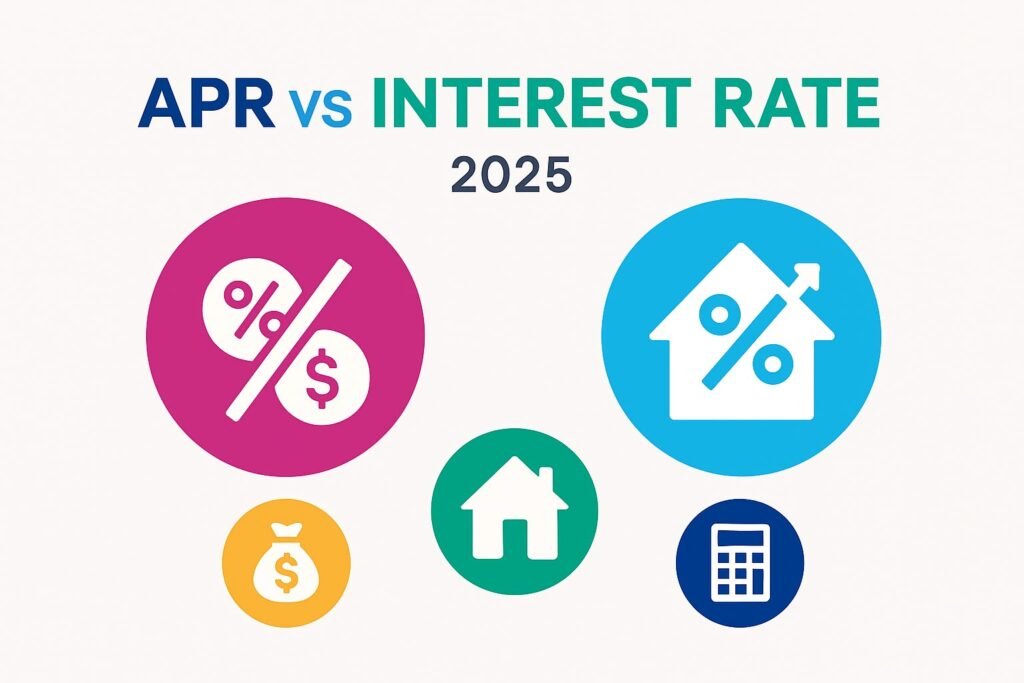
When you shop for a mortgage, car loan, personal loan, or credit card, you’ll see two numbers everywhere:
- Interest Rate
- APR (Annual Percentage Rate)
Most borrowers assume these are the same — but they aren’t.
In fact, the difference between APR and interest rate can affect:
- Your actual cost of borrowing
- Which lender is truly cheaper
- Whether you overpay by thousands
- How long it takes to repay
- Whether a “low-rate offer” is really a good deal
This guide breaks down APR vs interest rate in simple terms, using free tools on your site so readers can calculate their own numbers instantly.
By the end, you will understand:
- What interest rate REALLY means
- What APR includes
- Why APR is almost always higher
- Which number you should compare
- How to calculate APR
- How lenders can hide fees behind interest rates
- How to compare mortgages, loans, and credit cards properly
And you’ll get step-by-step examples using:
👉 Loan Calculator — https://diumitra.com/tools/loan-calculator/
👉 Mortgage Calculator — https://diumitra.com/tools/mortgage-calculator/
👉 Car Loan Calculator — https://diumitra.com/tools/car-loan-calculator/
👉 Personal Loan Calculator — https://diumitra.com/tools/personal-loan-calculator/
👉 Payment Calculator — https://diumitra.com/tools/payment-calculator/
Let’s demystify one of the most misunderstood topics in personal finance.
1. What Is the Interest Rate? (Simple Definition)
The interest rate is the percentage a lender charges you just for borrowing the money — it does NOT include:
- Fees
- Admin charges
- Origination fees
- Broker fees
- Mortgage product fees
- Compulsory insurance
- Closing costs
Interest Rate = The cost of borrowing the money only.
Example:
If a lender offers a 5% interest rate, then you pay 5% per year on the principal.
But does that tell you how much the loan REALLY costs?
No.
And this is where APR comes in.
2. What Is APR? (The Real Cost of Borrowing)
APR (Annual Percentage Rate) shows the total yearly cost of borrowing, including:
- Interest
- Fees
- Charges
- Compulsory products (if required to get the loan)
- Broker fees (for mortgages)
APR = Full cost of borrowing, including fees, over 12 months.
APR gives the real picture — which is why APR is usually higher than the base interest rate.
3. Why APR Is Almost Always Higher Than Interest Rate
Because lenders add fees like:
- Arrangement fees
- Application fees
- Processing fees
- Underwriting charges
- Product fees
- Closing costs (for mortgages)
Even if the interest rate is low, fees can push the APR higher.
Example:
- Lender A: 4.5% interest, £1,999 fee → APR 5.1%
- Lender B: 5.1% interest, £0 fee → APR 5.1%
Both loans cost the same!
But the interest rate alone hides this fact.
4. APR vs Interest Rate: What’s the Real Difference?
Feature | Interest Rate | APR |
|---|---|---|
Includes interest? | ✔ | ✔ |
Includes lender fees? | ✘ | ✔ |
Includes broker fees? | ✘ | ✔ |
Includes compulsory charges? | ✘ | ✔ |
Shows real cost of loan? | ✘ | ✔ |
Better for comparing loans? | ✘ | ✔ |
Required by law? | ✘ | ✔ (for most loans) |
APR = more accurate
Interest rate = incomplete
5. Use This Rule: Compare APR, Not Interest Rate
When comparing loans:
- The lowest interest rate might NOT mean the lowest cost
- But the lowest APR almost ALWAYS means the cheapest loan overall
This is why APR is required by law for:
- Mortgages
- Car loans
- Personal loans
- Credit cards
If a lender only advertises interest rate, be careful — they may be hiding fees.
6. APR vs Interest Rate for Mortgages
Mortgages have the most hidden fees, so APR matters a lot.
Fees include:
- Arrangement fees (£999–£2,499)
- Product fees
- Valuation fees
- Legal fees
- Broker fees
- Compulsory insurance (sometimes)
Try a mortgage example:
Use the Mortgage Calculator:
👉 https://diumitra.com/tools/mortgage-calculator/
Now use the Mortgage Affordability Estimator to estimate borrowing:
👉 https://diumitra.com/tools/mortgage-affordability-estimator/
Mortgage Example
A:
- 4.2% interest
- £1,999 fee
- APR = 4.8%
B:
- 4.7% interest
- £0 fee
- APR = 4.7%
Loan B is cheaper even though interest is higher.
7. APR vs Interest Rate for Car Loans
Car finance often includes:
- Application fees
- Option-to-purchase fees
- Administration fees
- Balloon payments (PCP)
Use:
👉 Car Loan Calculator: https://diumitra.com/tools/car-loan-calculator/
👉 Car Finance Calculator (compare PCP/HP): https://diumitra.com/tools/car-finance-calculator/
APR is extremely important for HP and PCP because fees are buried in the contract.
8. APR vs Interest Rate for Personal Loans
Personal loans often advertise:
- “From 4.9% interest”
- But APR may be higher depending on your credit score
Use:
👉 Personal Loan Calculator
https://diumitra.com/tools/personal-loan-calculator/
A low interest rate doesn’t guarantee a cheap loan if fees are charged.
9. APR vs APRC — What’s the Difference?
For mortgages, you’ll also see APRC.
APRC (Annual Percentage Rate of Charge)
= APR including future variable rate projections over the entire mortgage term.
While APR covers year one, APRC covers the full lifetime of the mortgage.
APR = near-term cost
APRC = long-term picture
10. When Interest Rate Matters More Than APR
While APR is usually more important, interest rate can matter more when:
- You plan to refinance within 2–5 years
- You will pay off the loan early
- You only need a short-term loan
- The product fee is extremely high
- You want the lowest monthly payment, not the lowest total cost
APR assumes you keep the loan for the full term — which many borrowers do not.
So compare:
- APR for long-term affordability
- Interest rate if you’ll refinance or repay early
Use the Payment Calculator to break down exact monthly costs:
👉 https://diumitra.com/tools/payment-calculator/
11. Free Tools to Compare APR vs Interest Rate (Instantly)
Your site already has powerful calculators that make comparisons easy:
🔹 Mortgage Tools
✔ Mortgage Calculator
https://diumitra.com/tools/mortgage-calculator/
✔ Mortgage Affordability Estimator
https://diumitra.com/tools/mortgage-affordability-estimator/
🔹 Loan & Personal Financing Tools
✔ Loan Calculator
https://diumitra.com/tools/loan-calculator/
✔ Personal Loan Calculator
https://diumitra.com/tools/personal-loan-calculator/
✔ Payment Calculator
https://diumitra.com/tools/payment-calculator/
🔹 Car Finance Tools
✔ Car Loan Calculator
https://diumitra.com/tools/car-loan-calculator/
✔ Car Finance Calculator (PCP, HP, Lease comparison)
https://diumitra.com/tools/car-finance-calculator/
12. How Lenders Use APR to Market Loans
Tactic 1 — Low Interest, High Fees
Lenders show a low interest rate to attract you, but then add:
- £1k–£2k fees
- High product charges
- Application fees
APR exposes the truth.
Tactic 2 — Stepped Rates
Year 1 is low
Year 2 is higher
Year 3 is higher again
APR forces lenders to calculate an average cost.
Tactic 3 — Optional Fees (Which Are Not Optional)
Many lenders advertise “optional” add-ons like:
- Insurance
- Admin
- Aftercare packages
But if they are needed to secure the rate, they must be included in APR.
Tactic 4 — High APR on Bad Credit Loans
Some lenders offer:
- 4.9% interest
- APR 29.9%
This indicates fee loading or risk-based pricing.
13. Examples: When APR and Interest Rate Don’t Match
Example 1: Personal Loan
- 5.0% interest
- £200 fee
- APR 7.1%
Example 2: Mortgage
- 3.8% interest
- £1,499 fee
- APR 4.4%
Example 3: Car Loan
- 7.9% interest
- Option-to-purchase fee + admin fees
- APR 11.2%
APR reveals the real story.
14. Hands-On: Calculate APR Yourself Using Free Tools
Let’s break down a simple £10,000 loan over 5 years.
Using your Loan Calculator:
👉 https://diumitra.com/tools/loan-calculator/
Enter:
- Loan: £10,000
- Rate: 6%
- Term: 5 years
- Add £300 fee
You’ll see:
- Monthly payments
- Total interest
- Total repayment
- Real cost of borrowing
This shows the actual APR once charges are included.
15. APR and Credit Score: How They Affect Each Other
Higher credit score = lower APR
Lower credit score = dramatically higher APR
Borrowers with poor credit may have:
- High fees
- High risk adjustments
- Higher interest margins
APR reveals this instantly.
16. APR and Variable Rate Loans
Interest rate may start low, but because it can change, lenders must calculate:
- Introductory rate
- Follow-on rate
- Estimated average rate over term
This creates the APRC figure commonly seen in mortgages.
APR and APRC give you protection against unclear pricing.
17. Should You Choose the Lowest APR?
Not always.
You should choose the lowest APR unless:
- You are refinancing soon
- You need lowest monthly payments
- You don’t plan to keep the loan full term
- Early repayment penalties are high
APR assumes full-term borrowing — your real plans matter too.
18. APR and Early Repayment
If you pay off early:
- Interest drops
- But fees remain
- APR may not reflect your real cost
This is why comparing both APR and interest rate is best.
19. Summary Table: APR vs Interest Rate
Feature | Interest Rate | APR |
|---|---|---|
Includes fees? | ❌ | ✔ |
Shows true cost? | ❌ | ✔ |
Good for monthly comparisons? | ✔ | ✔ |
Good for total cost comparison? | ❌ | ✔ |
Better for refinancing scenarios? | ✔ | Maybe |
Better for long-term loans? | ❌ | ✔ |
20. Final Verdict: APR vs Interest Rate — Which Should You Use?
Use APR when comparing total loan cost
Mortgages
Car loans
Personal loans
Credit cards
Use Interest Rate when comparing short-term cost
Short-term loans
Loans you plan to refinance
Loans you’ll pay off early
Conclusion
Understanding the difference between APR and interest rate empowers you to choose the right mortgage, loan, or finance deal — without falling for misleading advertising.
Whenever you compare borrowing options, remember:
- Interest rate tells part of the story
- APR tells the whole story
And with your website’s calculators, users can instantly test real numbers and compare options with confidence.
Free Tools Mentioned in This Guide
✔ Mortgage Calculator
https://diumitra.com/tools/mortgage-calculator/
✔ Mortgage Affordability Estimator
https://diumitra.com/tools/mortgage-affordability-estimator/
✔ Loan Calculator
https://diumitra.com/tools/loan-calculator/
✔ Personal Loan Calculator
https://diumitra.com/tools/personal-loan-calculator/
✔ Car Loan Calculator
https://diumitra.com/tools/car-loan-calculator/
✔ Car Finance Calculator
https://diumitra.com/tools/car-finance-calculator/
✔ Payment Calculator
https://diumitra.com/tools/payment-calculator/