
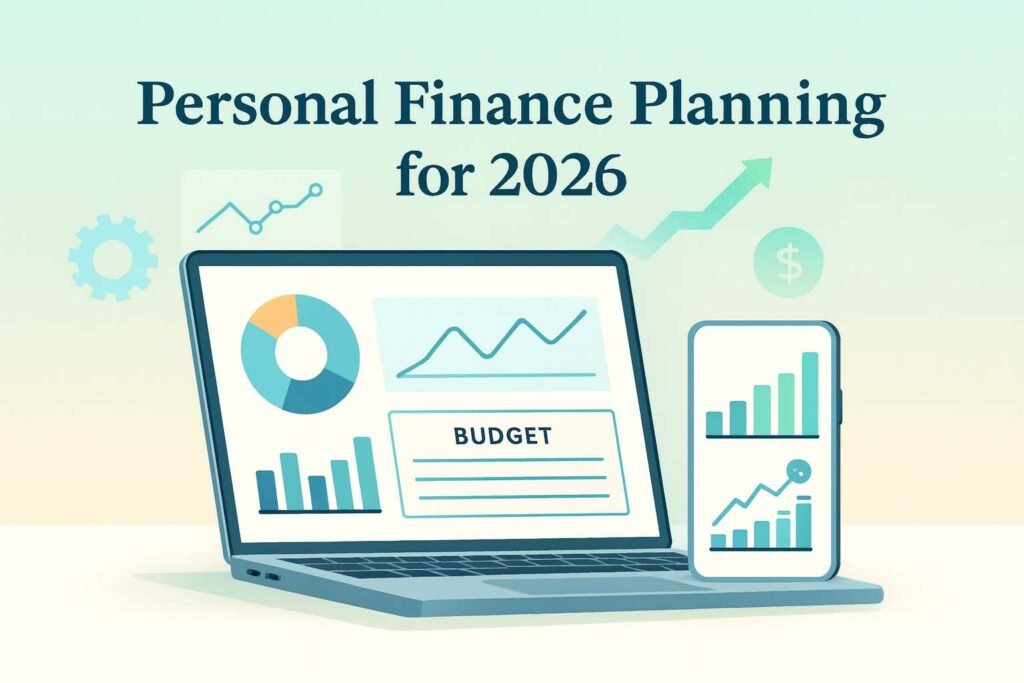
Financial planning has become more essential than ever in 2026. With the cost of living still rising, markets shifting rapidly, and major changes in technology and employment reshaping how people earn and save, individuals and families are re‑evaluating their financial strategies.
Whether you want to buy a home, grow your savings, eliminate debt, or work toward long‑term financial independence, this updated guide walks you through every key step of financial planning in 2026 — supported by powerful free tools and calculators you can use immediately.
What Financial Planning Means in 2026 — and Why It Matters More Than Ever
Financial planning is the process of understanding how your income, expenses, savings, investments, and long‑term goals work together to create financial stability.
In 2026, external pressures such as inflation, higher interest rates, and evolving job markets have made structured financial planning not just helpful — but essential.
A strong financial plan helps you:
- Prepare for unexpected emergencies
- Build long‑term wealth
- Reduce debt strategically
- Make informed financial decisions
- Save for major life milestones
- Protect your family’s financial future
Throughout this guide, you’ll find references to free calculators that support each step of your planning.
Step 1: Get a Clear Understanding of Your Current Financial Position
Before you can build a strong financial plan, you need a complete picture of where you stand today. This includes:
- Your true take‑home income
- Your monthly spending
- Your outstanding debts
- Your savings and investments
- Your credit score
This becomes your financial baseline — the foundation for every decision that follows.
Calculate Your Real Income
Many people focus on their gross salary, but your financial reality depends on your net income — what you actually take home after taxes, pension contributions, and deductions. Review your recent payslips to calculate your true monthly income.
Review Your Monthly Spending
Look back at the last 3–6 months of bank statements to identify:
- Subscription and membership fees
- Food, transport, and lifestyle spending
- Irregular or unexpected charges
- Areas where spending has increased
This helps you uncover hidden expenses and make more intentional choices.
Assess Your Debt
List every debt you have, including:
- Interest rates
- Minimum monthly payments
- Total outstanding balances
- Remaining repayment terms
You’ll use this information later to build a repayment strategy.
Step 2: Build a Realistic Budget and Spending Plan
Budgeting isn’t about restriction — it’s about directing your money with purpose.
A popular starting point is the 50/30/20 rule:
- 50% → Essentials (housing, utilities, food)
- 30% → Lifestyle and personal spending
- 20% → Savings and debt repayment
If you live in a high‑cost area, you may need to adjust these percentages.
Budgeting Tips for 2026
- Automate savings and bill payments
- Track and cancel unused subscriptions
- Review your spending every quarter
- Avoid lifestyle inflation as your income grows
- Use a budgeting app or spreadsheet to stay consistent
💡 Maximize Your Household Income: Part of a smart budget is ensuring you aren’t missing out on available support. Are you claiming everything you are entitled to? View our UK Benefit Eligibility Guidance for 2026/27 to see if your household income could be boosted by Universal Credit, PIP, or Child Benefit based on the new April 2026 rates.
A well‑structured budget is the foundation of long‑term financial stability.
Step 3: Build a Strong Emergency Fund
An emergency fund protects you from financial shocks such as job loss, medical bills, car repairs, or urgent travel.
Recommended Emergency Fund Levels
- Minimum: 1 month of expenses
- Good: 3 months
- Strong: 6 months
- Ideal: 12 months (especially for freelancers, parents, or single‑income households)
Use a savings projection tool to calculate how much you need to save each month and how long it will take to reach your goal.
Step 4: Pay Down High‑Interest Debt With a Strategic Plan
High‑interest debt — especially credit cards — can severely limit your financial progress.
Two proven repayment strategies include:
1. Avalanche Method
Focus on paying off the debt with the highest interest rate first. This saves the most money over time.
2. Snowball Method
Start by paying off the smallest balance first to build motivation and momentum.
If you have a car loan or finance agreement, compare offers from multiple lenders to ensure you’re getting the best possible terms.
Step 5: Set Short‑Term Financial Goals (1–5 Years)
Short‑term goals help you stay motivated and build financial discipline. These may include:
- Travelling
- Saving for a car
- Home improvements
- Starting a business
- Expanding your emergency fund
Use savings goal calculators to track your progress and adjust your monthly contributions.
Step 6: Plan for Long‑Term Goals (5–30 Years)
Long‑term goals require a structured savings and investment strategy. These may include:
- Buying a home
- Paying off a mortgage
- Building investment wealth
- Saving for children
- Achieving financial independence
- Retirement planning
Home Buying Goals
Speak with a mortgage advisor to estimate:
- Your borrowing capacity
- Your monthly repayments
- Your debt‑to‑income (DTI) ratio
- Your readiness for pre‑approval
Planning for Property Ownership in 2026
Buying a home is one of the biggest financial decisions you’ll ever make. In 2026, success requires more than just saving a deposit — you need to understand lending criteria, interest rate trends, and visa‑specific requirements for expats and NRIs.
Before viewing properties, make sure your financial foundation is strong. Expert mortgage guidance can help you understand your borrowing power and documentation requirements.
Investing in 2026: What’s New and What Still Works
Investing remains one of the most effective ways to build long‑term wealth. In 2026, investing has become more accessible thanks to:
- Fractional shares
- Low‑cost index funds
- Commission‑free trading apps
- Automated investing platforms
- Digital wealth management
- AI‑powered investment tools
Popular Investment Options in 2026
- Index funds
- ETFs
- Real estate
- Government bonds
- REITs
- Dividend stocks
- Retirement accounts
Use investment projection tools to estimate returns and see the power of compounding over time.
Retirement Planning in 2026 and Beyond
With rising living costs and longer life expectancy, retirement planning is more important than ever.
A common guideline is to save 25× your annual expenses, based on the 4% rule. A financial planner can help you calculate your personalised retirement target.
Protect Your Financial Future With Insurance and Risk Management
Insurance ensures your financial plan stays intact during unexpected events.
Key types include:
- Life insurance
- Income protection
- Critical illness cover
- Car insurance
- Home insurance
- Health insurance
Choose coverage based on your income, lifestyle, and dependents.
Boost Your Credit Score in 2026 for Better Financial Opportunities
A strong credit score can unlock:
- Lower interest rates
- Better mortgage deals
- Cheaper car finance
- Higher loan approval chances
Tips to Improve Your Credit Score
- Pay bills on time
- Reduce credit utilisation
- Keep older accounts open
- Avoid multiple credit applications
- Dispute errors on your credit report
- Follow structured debt repayment plans
Monitor your credit report regularly to track your borrowing strength and DTI ratio.
Pro Tip: Lenders don’t just look at your score; they look at your Debt-to-Income (DTI) Ratio. This is the percentage of your gross monthly income that goes toward paying debts. Keeping your DTI below 40% is critical for mortgage approval. You can learn how to calculate your specific ratio in our UK Mortgage Eligibility Guide.
Use Free Tools to Put Your Financial Plan Into Action
To turn your financial strategy into real results, you need accurate numbers. You can access a full suite of 21 free financial and health calculators to help you:
- Estimate taxes
- Project retirement savings
- Calculate loan repayments
- Track investment growth
- Plan savings goals
⭐ Access all free calculators here: https://diumitra.com/tools/