
Compound interest is often described as “the eighth wonder of the world”, and for good reason — it can transform modest savings into significant long-term wealth. Whether you’re saving, investing, planning retirement, or evaluating loans, understanding how compound interest works is one of the most powerful financial skills you can learn.
This comprehensive guide breaks down compound interest in simple terms, explains the math behind it, shows real-world examples, and demonstrates how to use it to grow your money faster than ever.
Along the way, you’ll also find free tools — including the
👉 Compound Interest Calculator
👉 Savings Calculator
👉 Investment Calculator
👉 Retirement Calculator
Use these tools to model your future money growth instantly.
1. What Is Compound Interest? (Simple Definition)
Compound interest is interest earned on both:
- your initial amount (principal), and
- the interest that has already been added over time
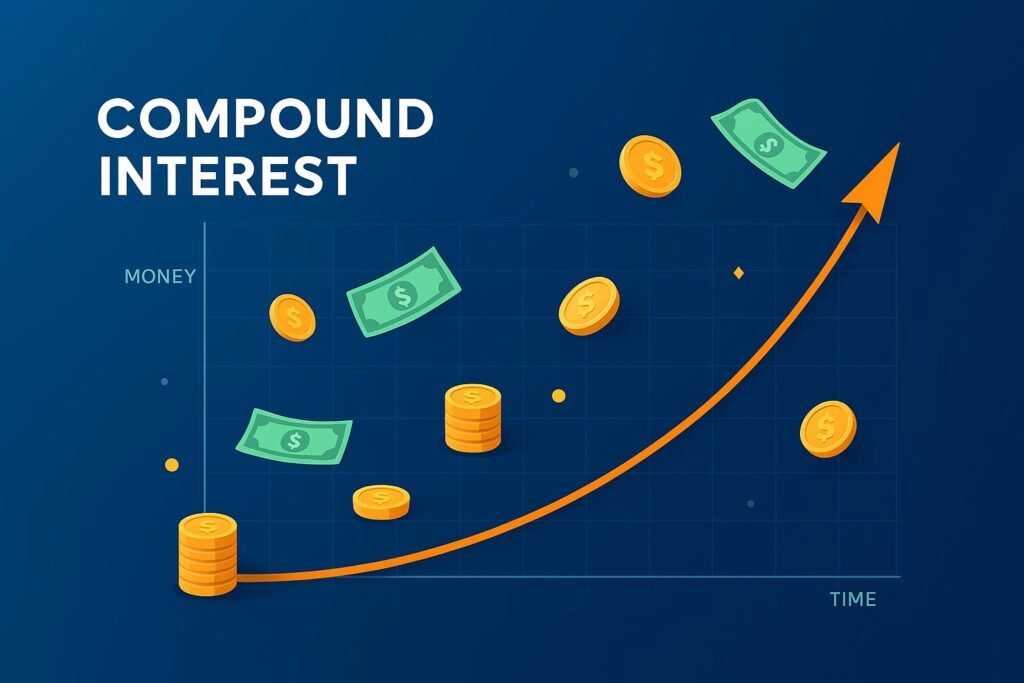
This creates a snowball effect — your money grows faster as time goes on.
Simple Interest vs Compound Interest
Type of Interest | How It Works | Growth Speed |
|---|---|---|
Simple Interest | Only earns interest on the original amount | Slow |
Compound Interest | Earns interest on the original amount + interest gained | Fast |
A Simple Example
If you invest £1,000 at 5% simple interest, you earn £50 every year, forever.
If you invest £1,000 at 5% compound interest, you earn:
- Year 1: £1,000 → £1,050
- Year 2: £1,050 → £1,102.50
- Year 3: £1,102.50 → £1,157.63
The earnings rise each year — without you adding more money.
2. Why Compound Interest Is So Powerful
Compound interest becomes more dramatic over time. The key factors are:
1. The interest rate
A higher rate accelerates compounding.
2. The number of compounding periods
Daily compounding grows faster than monthly or annual compounding.
3. The number of years
Time is the biggest factor. Money invested early grows exponentially.
4. Additional contributions
Regular monthly deposits can multiply your final amount dramatically.
Use the Compound Interest Calculator to see the results instantly.
3. The Formula: How to Calculate Compound Interest
The standard formula:
A = P(1 + r/n)nt
Where:
- A = Future value
- P = Initial amount
- r = Interest rate
- n = Number of compounding periods
- t = Number of years
But you don’t need math — use free calculators
📌 Calculate it in seconds using:
👉 Compound Interest Calculator
👉 Savings Calculator
👉 Investment Calculator
4. Real-Life Examples of Compound Interest
Let’s compare two people who invest for retirement.
Investor A: Starts Early
- Starts at age 25
- Invests £200/month
- Stops at age 35
- Total contributions: £24,000
- Average return: 7%
Future value at age 65: £391,000+
Investor B: Starts Late
- Starts at age 35
- Invests £200/month
- Continues to age 65
- Total contributions: £72,000
- Same 7% return
Future value at age 65: £363,000+
➡️ Starting early beats investing more later.
This is the magic of compounding.
5. Daily vs Monthly vs Yearly Compounding
Interest can be compounded:
- Annually
- Semi-annually
- Quarterly
- Monthly
- Weekly
- Daily
- Continuously
Which is the best?
Daily compounding grows fastest, but the difference becomes most noticeable over decades.
Try it yourself
Use the Compound Interest Calculator to compare daily vs monthly compounding.
6. Compound Interest in Savings Accounts
Savings accounts use compound interest to grow your balance automatically.
Key terms you’ll see:
- APR – Annual Percentage Rate
- APY – Annual Percentage Yield (includes compounding)
APY is always higher because it factors in compounding.
Example
A savings account with:
- 4% APR
- 4.08% APY
The APY is higher because of monthly or daily compounding.
Improve your plan using:
7. Compound Interest in Investments
Investments such as:
- Stocks
- Bonds
- Index funds
- Mutual funds
- Real estate funds
All rely on compound interest to create long-term growth.
Expected long-term averages (historical)
- Stocks: 7–10% per year
- Bonds: 3–5% per year
- Savings: 1–4%
Calculate your investment growth
Use the:
👉 Investment Calculator
8. Compound Interest in Retirement Planning
Compounding is the core of retirement wealth. The earlier you start saving, the less money you need each month.
Retirement example
To reach £1,000,000 by age 65, assuming 7% return:
Starting Age | Monthly Required |
|---|---|
25 | £381 |
35 | £820 |
45 | £1,810 |
55 | £5,430 |
📌 Time is the deciding factor.
Plan yours using the:
👉 Retirement Calculator
9. The Rule of 72: A Quick Shortcut
The Rule of 72 estimates how long it takes to double your money.
Years to double=72÷interest rate
Examples
- 6% interest → 12 years to double
- 8% interest → 9 years to double
- 12% interest → 6 years to double
This is how compound interest accelerates wealth over time.
10. How to Maximise Compound Interest in 2025
Here are the best strategies for growing your money faster:
1. Start as early as possible
Even small contributions grow dramatically over 20–40 years.
2. Invest regularly (monthly contributions)
Automation ensures consistent growth.
Try modelling monthly contributions using the:
👉 Savings Calculator
3. Choose high-interest or high-return accounts
Higher APR/APY = faster compounding.
4. Reinvest all earnings
Never withdraw interest unless necessary.
Reinvesting keeps the snowball growing.
5. Increase contributions yearly
A small 5% increase each year can massively change the outcome.
6. Avoid high-interest debt
Debt can compound against you.
If your credit cards compound at 25% APR, you’ll lose money faster than investments can grow.
7. Keep money in long-term investments
The longer your money compounds, the more exponential the growth becomes.
11. Compound Interest and Debt: The Dark Side
Compound interest doesn’t always help — it can also hurt when applied to debt.
High-interest loans and credit cards can grow rapidly over time.
Example
If you owe £5,000 at 25% APR and make minimum payments, the balance can take 20+ years to clear.
Understanding compound interest helps you:
- spot bad loans
- avoid predatory lenders
- pay off debt strategically
12. Using Calculators to Take Control of Your Money
Here’s a quick guide to the free tools you can use:
Compound Interest Calculator
Calculate growth with compounding, contributions, and time.
👉 https://diumitra.com/tools/compound-interest-calculator/
Savings Calculator
Work out a goal and monthly amount needed.
👉 https://diumitra.com/tools/savings-calculator/
Investment Calculator
Predict long-term investment growth.
👉 https://diumitra.com/tools/investment-calculator/
Retirement Calculator
Plan your retirement income and savings target.
👉 https://diumitra.com/tools/retirement-calculator/
Use them regularly to track your financial growth.
13. Final Thoughts: Compound Interest Is the Key to Wealth
Compound interest is one of the most powerful forces in personal finance. It can grow your savings, multiply your investments, and help you retire comfortably — as long as you understand how to use it.
By starting early, investing consistently, choosing high-return accounts, and letting time work its magic, you can build significant long-term wealth.
Make compound interest your financial superpower in 2025 and beyond.