

This first-time buyer guide UK 2026 explains how to prepare for buying your first home in Britain: building a deposit, checking affordability, getting an Agreement in Principle, viewing homes, making an offer, arranging a survey, instructing a solicitor or licensed conveyancer, understanding property tax, exchanging contracts and completing. The detailed legal sequence mainly follows England and Wales, with UK-nation differences highlighted where they matter.
Buying Your First Home in the UK: The 2026 Order That Matters
Start with a realistic total budget rather than the asking price alone. Build your deposit and fee buffer, prepare the source-of-funds trail, speak to an FCA-authorised mortgage adviser or lender if you need finance, obtain an Agreement in Principle, then search, offer, instruct a conveyancer, complete the mortgage and survey checks, exchange contracts and complete only after the legal and funding position is ready.
2026 source check: GOV.UK, HMRC, MoneyHelper, FCA, Revenue Scotland and GOV.WALES. Mortgage eligibility, lender criteria, property taxes and home-buying schemes can change, so confirm your individual position before committing money.
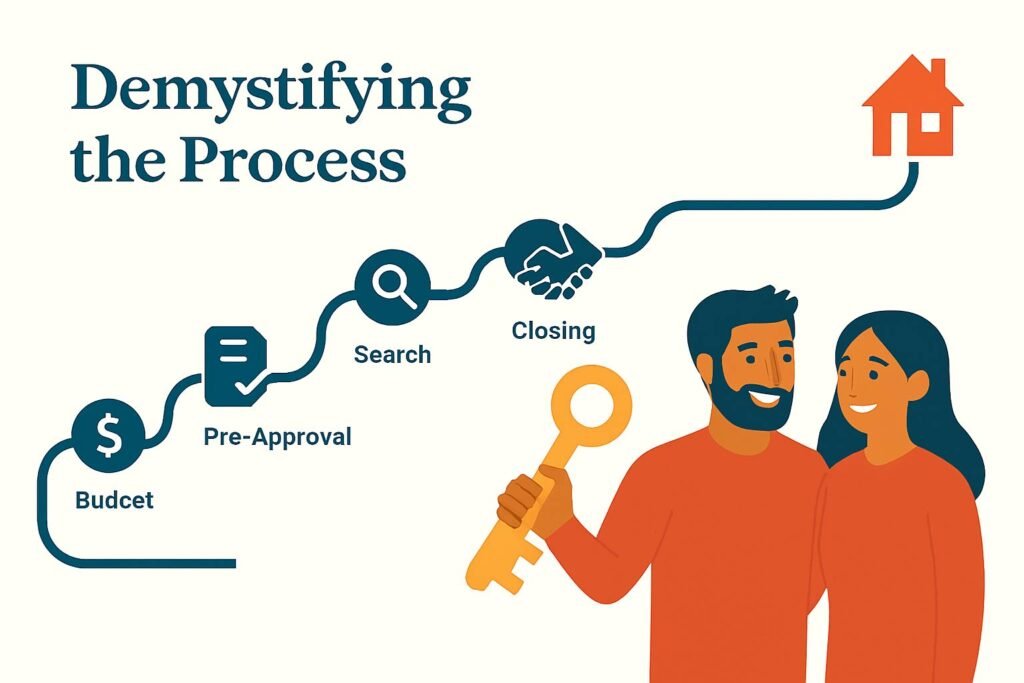
A practical 2026 UK first-home journey: prepare the budget, mortgage, property checks, legal work and completion in the right order.
First-Time Buying in 2026: The UK Rules That Matter
The previous article used several US concepts. For UK buyers, the practical sequence is deposit, Agreement in Principle, estate agent, survey, solicitor or licensed conveyancer, exchange and completion.
Qualifying first-time buyers pay 0% SDLT on the first £300,000 and 5% on the portion from £300,001 to £500,000. Above £500,000, first-time buyer relief is not available.
A new First Time Buyer ISA is under consultation, but Lifetime ISAs can still be opened and used under the existing rules. The £450,000 first-home cap and 12-month rule remain important.
The government published a home-buying and selling reform roadmap in June 2026. Until implemented changes take effect, buyers should continue to follow the current offer, conveyancing, survey, mortgage, exchange and completion process.
Leasehold/commonhold reforms are progressing in 2026. Your conveyancer should confirm the current law, lease term, ground rent, service charges and building obligations that apply to the specific property.
2026 planning note: consultation announcements and reform roadmaps are not the same as completed legal changes. Do not rely on headlines alone; use the current tax rules, lender criteria and your conveyancer’s advice at the point you commit to a purchase.
Are You Legally a First-Time Buyer?
For everyday conversation, “first-time buyer” means someone buying their first home. For tax relief, the definition can be stricter. In England and Northern Ireland, HMRC says first-time buyer relief is for individuals who have never previously owned an interest in a residential property in the UK or anywhere else in the world, and every joint buyer must qualify.
For joint purchases, every buyer must meet the relevant relief conditions, so one person’s previous residential ownership can affect the whole transaction.
The UK First-Time Buyer Process: 10 Steps from Budget to Keys
Use this sequence as a planning map, then let regulated mortgage and legal professionals handle decisions within their roles.
Add deposit, tax if due, mortgage costs, survey, legal work, searches, insurance, removals and an emergency buffer.
Organise bank statements and source-of-funds evidence, including gifted-deposit or overseas-savings records where relevant.
Speak to an FCA-authorised mortgage adviser, broker or lender if you need finance, and obtain an Agreement in Principle where appropriate.
Compare location, tenure, condition, service charges, commuting costs, local amenities and long-term practicality rather than bedrooms alone.
Make the price and any important conditions clear. In England and Wales, remember that an accepted offer is generally still subject to contract.
Your solicitor or licensed conveyancer opens the legal file, completes identity and AML checks, reviews title and begins searches and enquiries.
The lender assesses affordability and documentation and arranges its valuation. The final mortgage offer is separate from the earlier AIP.
A lender valuation is for the lender. Consider a suitable buyer survey so you understand condition, defects and potential repair questions.
Do not exchange until your conveyancer has explained the legal position and your mortgage, deposit, insurance and agreed completion arrangements are ready.
Exchange normally creates the legal commitment in England and Wales. On completion, purchase funds are transferred and the keys are released.
How Much Should a First-Time Buyer Budget in 2026?
Start with what you can sustainably afford each month. MoneyHelper says first-time buyers commonly need at least a 5% or 10% deposit; a larger deposit can reduce borrowing and may widen mortgage options.
| Budget Item | Why It Matters | 2026 Preparation |
|---|---|---|
| Deposit | Your cash contribution toward the purchase price. | Keep the paper trail clear and avoid unexplained movements before lender/conveyancer checks. |
| Mortgage costs | Product, booking, valuation or adviser fees may apply depending on the route. | Compare the total cost and ask an FCA-authorised adviser or lender what is payable and when. |
| Legal and searches | Your conveyancer handles title, searches, enquiries and completion work. | Compare what the quote includes, VAT, disbursements and whether the firm is on your lender’s panel. |
| Survey | A buyer survey can identify defects that a lender valuation is not designed to explain to you. | Choose the survey level based on property age, construction and condition. |
| Property tax | SDLT, LTT or LBTT depends on the UK nation, price and buyer circumstances. | Ask your conveyancer to confirm the tax calculation before exchange/completion. |
| Insurance and moving | Buildings insurance, removals, storage and utility setup add to the cash needed. | Keep a buffer so completion does not consume every pound of your savings. |
Lifetime ISA Rules for a First Home
A Lifetime ISA can currently receive up to £4,000 each tax year and the government adds a 25% bonus. For a qualifying first-home withdrawal, current rules include a purchase price of £450,000 or less, buying with a mortgage, using a solicitor or conveyancer and waiting at least 12 months from the first payment into the LISA. The government opened a consultation in June 2026 on a future First Time Buyer ISA, but existing LISA rules remain available while that replacement is being developed.
Do not transfer or withdraw the money yourself for the purchase. The LISA provider pays the qualifying funds to the conveyancer, and non-qualifying withdrawals can trigger a withdrawal charge.
Gifted Deposits and Savings from India
Family gifts or savings held in India can create extra source-of-funds and lender-evidence questions. Prepare the paper trail before the offer stage.
- Keep bank statements showing how the savings accumulated.
- Keep transfer records if money moves from India to the UK.
- For a family gift, ask the lender/adviser and conveyancer what gift letter and donor evidence they require.
- Do not move large sums through several accounts without retaining the transaction trail.
DiuMitra can help you prepare general questions through UK Mortgage Guidance, but only an FCA-authorised mortgage professional, lender and your legal professional can confirm what evidence is acceptable for your transaction.
Mortgage in Principle: What First-Time Buyers Should Know
A Mortgage in Principle or Agreement in Principle (AIP) indicates what a lender may be willing to lend at that stage. It is not a guarantee or the final mortgage offer.
Expect questions about income, regular spending, debts, deposit, credit history and residency. Self-employed or visa-based cases may need more documentation.
Avoid assuming the AIP locks in approval. A full application can involve deeper affordability, credit, valuation and document checks.
The FCA recommends using a regulated mortgage adviser where advice is needed and checking the FCA Register. DiuMitra does not recommend mortgage products, lenders or borrowing amounts.
House Hunting in the UK: What to Check Before You Fall in Love
Use estate agents and property portals to shortlist homes, then verify the important details through viewings, surveys and legal checks.
Check commute, public transport, parking, schools where relevant, noise, flood or planning questions, local services and the cost of living in that area.
Notice damp, roof age, windows, cracking, heating, drainage smells and signs of rushed cosmetic work, then let a surveyor investigate properly.
For leasehold, ask early about lease length, ground rent, service charge, reserve funds, major works and management arrangements.
Ask whether the seller has found another property, whether the home is chain-free, what fixtures are included and the seller’s preferred timescale.
Leasehold reform continues to develop in 2026. Do not rely on a headline about future commonhold or ground-rent changes when deciding whether a specific flat is suitable; ask your conveyancer to explain the current legal position and documents for that property.
How to Make an Offer on Your First Home
Base your offer on budget, local prices, condition and competition. Being chain-free may help your position, but it should not push you beyond a safe budget.
- State the amount clearly: usually through the estate agent in an agent-led sale.
- Explain your position: first-time buyer, chain-free and AIP obtained where relevant.
- Keep conditions sensible: your purchase remains subject to legal, mortgage and survey checks.
- Record important points: fixtures, timescale or agreed items should ultimately be reflected in the legal process rather than relying on conversation.
Survey vs Lender Valuation: They Are Not the Same
A lender valuation is primarily for the mortgage lender to assess whether the property provides acceptable security for the loan. It should not be treated as a substitute for a buyer survey.
Your own survey can help identify condition concerns and questions about repairs. The suitable level depends on the property’s age, type and apparent condition, so ask a qualified surveyor what level is appropriate rather than selecting only by price.
Conveyancing: What Your Solicitor or Licensed Conveyancer Does
Your conveyancer handles the legal transfer, including identity/source-of-funds checks, title and contract review, searches, enquiries, lender requirements, exchange, completion and registration.
Check legal fee, VAT, searches, Land Registry items, bank transfer charges and possible extras for leasehold, gifted deposit or new-build work.
Ask whether the solicitor or licensed conveyancer can act for your intended lender so you do not create avoidable duplication or delay.
Use DiuMitra’s Conveyancing Comparison Support UK to prepare comparison questions. DiuMitra does not review contracts, titles, searches or legal risks.
First-Time Buyer Property Tax in 2026: England, Wales, Scotland & Northern Ireland
Property transaction tax is different across the UK. Your solicitor or conveyancer should confirm the tax due for the actual transaction, especially where there is joint ownership, overseas property history, non-UK residence or another complex factor.
| Nation | 2026 First-Time Buyer Position | Key Point |
|---|---|---|
| England | Qualifying first-time buyer relief: 0% on the first £300,000 and 5% on £300,001–£500,000. | No first-time buyer relief if the purchase price is over £500,000. |
| Northern Ireland | Uses SDLT and the same qualifying first-time buyer relief thresholds as England. | Check the transaction against current HMRC rules. |
| Scotland | First-time buyer LBTT relief increases the nil-rate band to £175,000. | Revenue Scotland says all joint buyers must qualify and overseas residential ownership can affect eligibility. |
| Wales | There is no separate first-time buyer LTT relief; the main residential nil-rate threshold is currently £225,000. | Use the Welsh Revenue Authority/GOV.WALES calculator for the current transaction. |
For England and Northern Ireland, HMRC also has a 2% non-resident SDLT surcharge in certain residential transactions. The SDLT residence test is specific to the tax rules, so someone should not assume their immigration status answers the SDLT-residence question.
First-Time Buyer Schemes Worth Checking in 2026
Schemes can reduce upfront barriers, but eligibility, availability and resale conditions vary. Verify the current rules before relying on one.
Current rules allow up to £4,000 contributions each tax year, with first-home conditions including the £450,000 price cap and 12-month account rule.
Eligible buyers may purchase qualifying homes below market value. The discount and eligibility conditions continue when the home is resold.
This can reduce the initial mortgage requirement but brings rent, service charges and scheme-specific costs that need careful comparison.
Home-buying support differs across England, Wales, Scotland and Northern Ireland. Use the relevant official housing portal for current schemes.
Exchange and Completion: When the Purchase Becomes Real
Before exchange in England and Wales, make sure the legal enquiries are resolved, the mortgage and deposit are ready, and you understand the completion date and insurance requirements.
After exchange, the transaction is normally legally binding. On completion day, your conveyancer requests and transfers the funds, confirms completion with the seller’s solicitor and the estate agent can release the keys.
After You Get the Keys: First-Week Homeowner Checklist
- Take meter readings and set up electricity, gas, water and broadband.
- Register for Council Tax or the relevant local property charge.
- Check buildings and contents insurance arrangements.
- Change external locks if appropriate and test smoke/carbon-monoxide alarms.
- Keep the mortgage offer, completion statement, title/legal correspondence and survey in a permanent home file.
- Build a maintenance reserve rather than treating every remaining pound as furnishing money.
First-Time Buyer UK 2026 Checklist
Check Your First-Home Plan Before You Commit
Use this as an organisational checklist. Mortgage, tax, legal and property decisions should still be confirmed with the appropriate regulated or qualified professional.
Official and Independent Sources for First-Time Buyers
Use primary or regulated sources for rules that affect tax, mortgages, savings schemes and legal commitments. Property-market articles can help with ideas, but they should not replace the current government, regulator or professional guidance for your transaction.
Frequently Asked Questions
Need the First-Time Buyer Steps Organised Before You Start?
Share where you are in the journey—saving a deposit, preparing mortgage questions, viewing a property or comparing conveyancers. DiuMitra can help you organise the process and questions, while regulated mortgage, legal, tax and property professionals remain responsible for professional advice and decisions.
⚠️ Disclaimer: This guide is for general information and community signposting only. DiuMitra is not authorised by the Financial Conduct Authority and does not provide mortgage advice, financial advice, legal advice, tax advice, conveyancing services, estate agency services, property valuation advice, investment advice or regulated professional representation. Any property, mortgage, legal, tax or conveyancing decision remains your responsibility. Confirm your position with an FCA-authorised mortgage adviser, qualified solicitor, licensed conveyancer, surveyor, tax professional or other regulated professional as appropriate.
